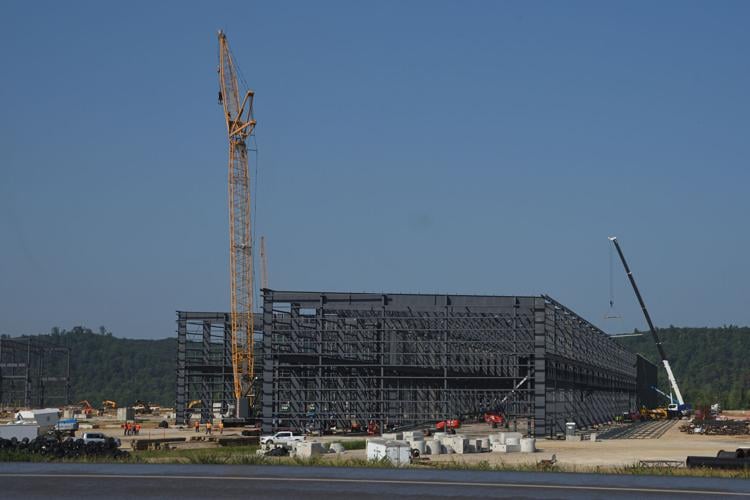
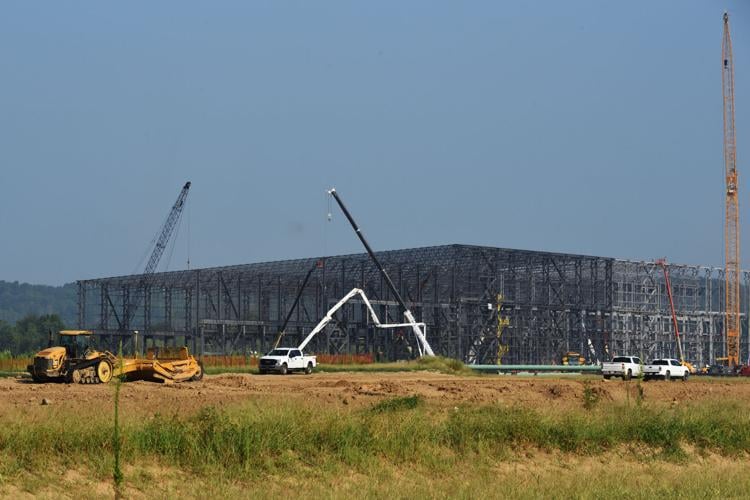
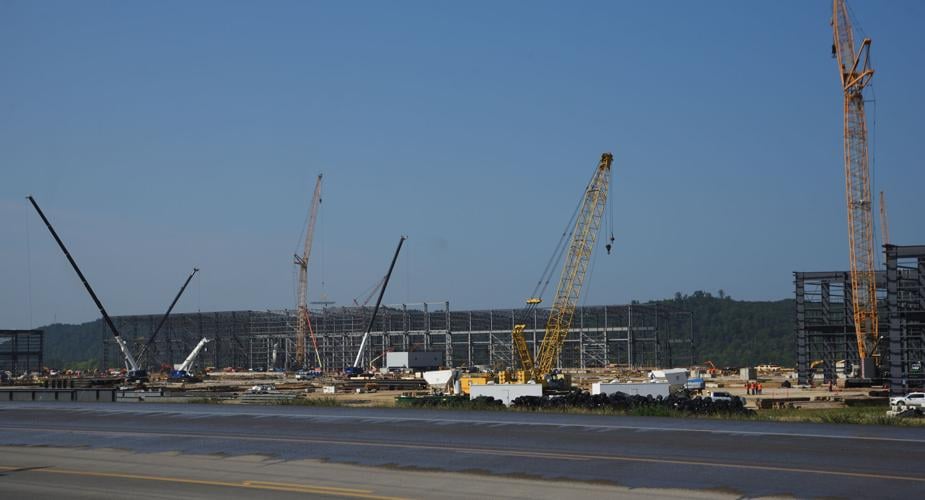
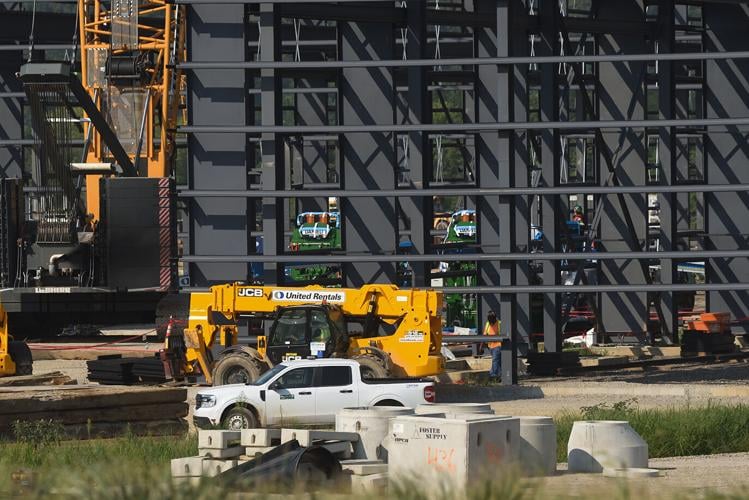
Construction continued at the Nucor Steel West Virginia mill at Apple Grove, Mason County, on Tuesday, Aug. 6, 2024.
Submitted photo
HUNTINGTON — Over the past 18 months, Nucor Corporation has seen a material uptick in steel imported from Mexico and Canada far above historic levels, according to Leon Topalian, the steel company's chair, president and CEO.
Topalian spoke about what he called "unfair trade practices ... contrary to the Section 232 agreements [of the 1962 Trade Expansion Act] with both countries" during Nucor's second quarter earnings call on July 23.
"It's also clear that China and other countries have been evading the Section 232 tariffs, and other duties by transshipping steel through our neighbors to the north and south," he said during the call.
This has led to an oversupply of steel, a decline in prices and reduced profit margins. Nucor, which is currently building a new sheet mill in Mason County, reported lower second quarter earnings.
Nucor reported consolidated second-quarter net earnings of $645.2 million, or $2.68 per diluted share. Company officials cited decreased earnings of the steel mills segment because of lower prices.
Officials said to expect a dip in third quarter earnings as well due to lower average selling prices.
While Nucor faces challenges with declining steel prices, Topalian said a recent agreement, if enforced, could level the playing field.
"Fortunately, a few weeks ago, trade representatives from the U.S. and Mexico announced an agreement designed to stop the flow of illegally imported steel from China and elsewhere," he said. "Under this new agreement, the U.S. will impose a 25% tariff on Mexican steel that is melted and poured outside of North America. And Mexico agreed to raise its tariff rates on imports from countries it does not have free trade agreements with. In our view, this was an important first step to stop the surge of steel imports from Mexico and address the problem of circumvention."
Topalian said more stringent efforts are needed from the U.S. government.
"Any exceptions to this new requirement, including through the exclusion process, will largely negate the benefits of the agreement," he said. "And we still have concerns about trade practices involving rebar, electrical conduit and the rise in fabricated steel products coming in from Mexico. We urge the U.S. government to continue working with Mexican leaders to address each of these issues."
New legislation could provide relief for Nucor, according to Topalian.
"We also urge Congress to pass the Leveling the Playing Field Act 2.0," he said. "This legislation includes critical updates to the U.S. trade remedy laws that would enhance domestic industries' ability to defend against unfairly traded imports, with new tools to address Chinese cross-border subsidies, and expedite investigations of repeat offenders that simply move production from one country to another. We appreciate the bipartisan support that exists for strong trade enforcement."
Construction continued at the Nucor Steel West Virginia mill at Apple Grove, Mason County, on Tuesday, Aug. 6, 2024.
Submitted photo
Construction continues on new Mason County sheet mill
As of July 25, Nucor West Virginia's new steel mill in Mason County — about 28 miles north of downtown Huntington — was about 10% complete, according to hot mill supervisor Sean O'Connell.
O'Connell told the Rotary Club of Huntington that the project was still on schedule and budget. The project is expected to take at least 18 months to complete, with Nucor anticipating full operations in 2027.
The plant will serve customers in the Midwest and is expected to employ 800 people when fully operational. Construction began in July 2023 with foundation and dirt work, and Nucor expects to have 2,000 contractors on site by the first quarter of 2025.
Construction continued at the Nucor Steel West Virginia mill at Apple Grove, Mason County, on Tuesday, Aug. 6, 2024.