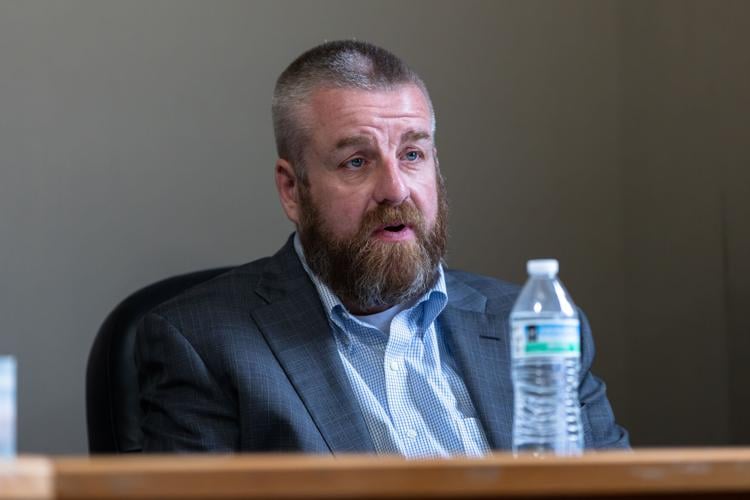
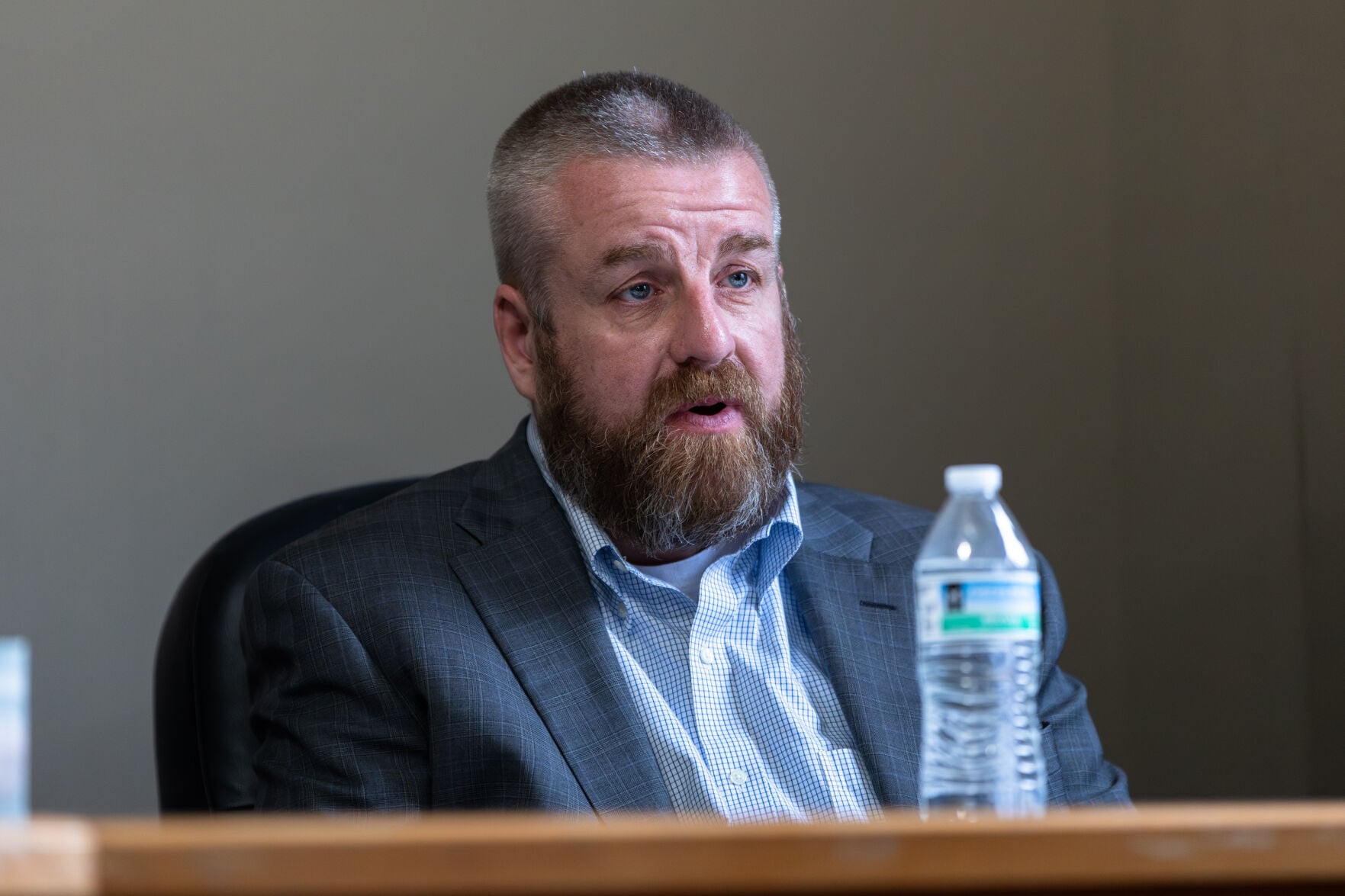
Jason Frame, office director for the West Virginia Department of Health, speaks as officials from Wayne County and the State of West Virginia conduct a news conference to discuss the ongoing water pollution and oil spill cleanup on Wednesday, Jan. 21, 2026, in Wayne.
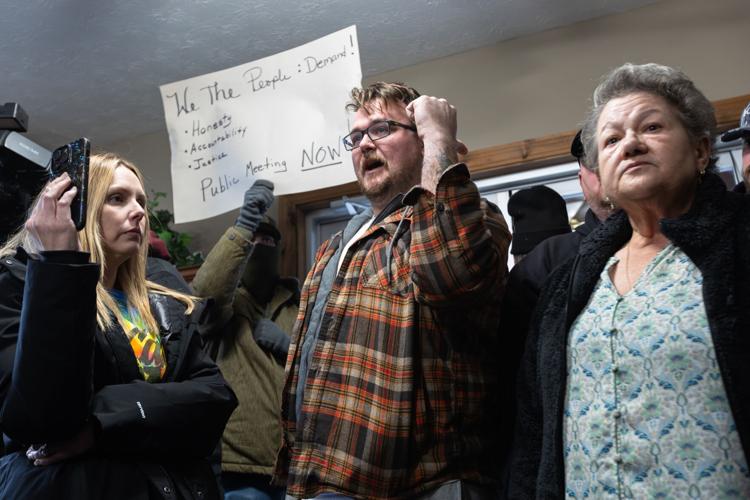
Wayne resident Michael Adkins speaks as officials from Wayne County and the State of West Virginia conduct a news conference to discuss the ongoing water pollution and oil spill cleanup on Wednesday, Jan. 21, 2026, in Wayne.
Wayne resident Michael Adkins speaks as officials from Wayne County and the State of West Virginia conduct a news conference to discuss the ongoing water pollution and oil spill cleanup on Wednesday, Jan. 21, 2026, in Wayne.
RYAN FISCHER | HD Media
WAYNE — The Town of Wayne in Wayne County earlier this week began the process of flushing the town’s water system following a “do not consume” order issued Friday after oil was found to have been released into its water source; however, Mayor Danny Grace said weather could affect that process.
The West Virginia Department of Health said Tuesday that “uni-directional flushing” was to begin at the treatment plant and follow the flow of water through the entire distribution system. After flushing is completed, samples will be sent to a certified laboratory and if results are non-detectable, residential flushing instructions will be provided, according to a news release.
The town’s “do not consume” order will remain in place during the flushing and testing process, which was expected to take seven to 10 days. Grace noted that an expected winter storm this weekend could complicate the process, which was already affected by some fire hydrants freezing in the cold temperatures to start the week.
Wednesday’s news conference grew heated as some in attendance expressed concerns over the information that has been made available and the way the situation has been handled, including on the timeline in which they were notified of problems with the water supply.
The difference between ‘do not use’ and ‘do not consume’
While preliminary testing has not identified petroleum-related impacts to the water system, the Department of Health and the Town of Wayne are aware of reports of odors in residential water, officials said.
Information obtained by state Department of Environmental Protection, including the manufacturer’s Safety Data Sheet and placards on the vandalized transformer, confirms the material involved is a non-PCB, petroleum-based mineral oil commonly used as an electrical insulating fluid, according to the DoH.
Jason Frame, office director for the West Virginia Department of Health, speaks as officials from Wayne County and the State of West Virginia conduct a news conference to discuss the ongoing water pollution and oil spill cleanup on Wednesday, Jan. 21, 2026, in Wayne.
RYAN FISCHER | HD Media
Jason Frame, office director for the DoH, said Wednesday that his agency reviewed the safety sheets for that compound — which he reiterated has not been identified in the water system thus far — and feels that with the level of dilution that would have taken place throughout the water system, it is highly unlikely to cause any health issues.
Frame also clarified what is meant by “do not consume” relating to the water.
“So, there’s two different levels of orders,” Frame said. “There’s a ‘do not use’ and a ‘do not consume.’ The mayor’s issued a ‘do not consume.’ Those can vary based on the situation, but the difference between the ‘do not use’ and the ‘do not consume,’ in this situation, is you can use (the water) to flush the toilets.”
Frame said the DoH would advise people to not take baths or wash clothes with the water at this point. He said, with taking a bath, especially when it comes to children, there is the potential of ingestion of the water. He said washing clothes is “less risky, but ultimately, you’re going to have skin contact there.”
“Again, I will state, we have no ... analytical evidence to indicate that that would be a problem, but we’re being as protective as possible,” he said.
According to information from the DoH, the Town of Wayne initiated sampling of raw and finished water Friday. Preliminary testing showed results within regulatory limits, and additional samples were submitted to a state-certified laboratory for final confirmation.
Additional preliminary distribution system samples were collected Sunday and delivered to a partner laboratory, with those results also reported as within regulatory limits, according to the DoH.
Protecting public drinking water remains a priority, the department said, with containment measures installed upstream.
Appalachian Power is mobilizing additional personnel and equipment to support remediation efforts and assist with water distribution, the DoH said.
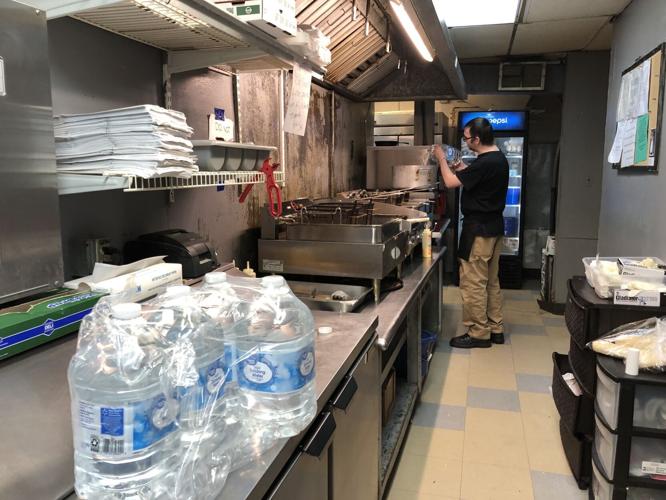
Tiny Manns (background) cooks with water in the kitchen of Gino's Pizza, in Wayne, on Tuesday, Jan. 20, 2026.
JESTEN RICHARDSON | HD Media
Businesses have been adjusting how they operate as they face challenges in the wake of the oil spill.
Supervisor Sis Clay and Evening Manager Tiny Manns of Gino’s Pizza & Spaghetti House at 224 Keyser St. in Wayne said the situation has not slowed business down so far. If anything, it feels a little busier, Manns said.
“It’s probably more convenient for people to come out here than is to try to clean everything at home and cook,” he added, admitting that it’s still a challenge “just maneuvering around all this.”
Gino’s has been using disposable plates and utensils, and not using its ice and fountain drink machines, Clay said.
It also has been buying water and using it for employees to wash their hands and prepare food with, which has been an additional expense.
“That’s the only thing it’s hurt us on is just going and buying 30, 60, 80 gallons of water a day,” Clay said. “To cook the pasta, to make the dough and to wash your hands and keep the utensils and keep everything sanitized, we use a lot [of water].”
After the flushing, Clay said Wayne’s Gino’s will have a company take apart, clean and sanitize “anything the water goes through,” such as the ice machine.
Still, she said she feels the town and mayor are “doing all they can to help us.”
“It’s tough for people that can’t afford to go get water,” Manns added. “It’s a tough thing right now, and it’s scary.”
CLICK HERE to follow the Charleston Gazette-Mail and receive