

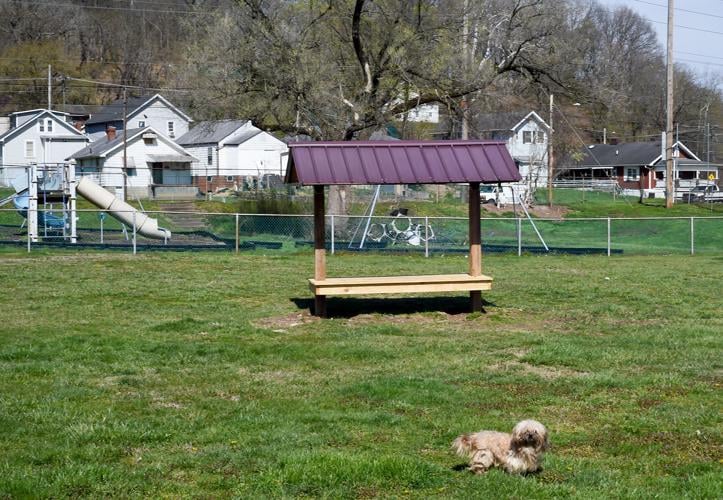

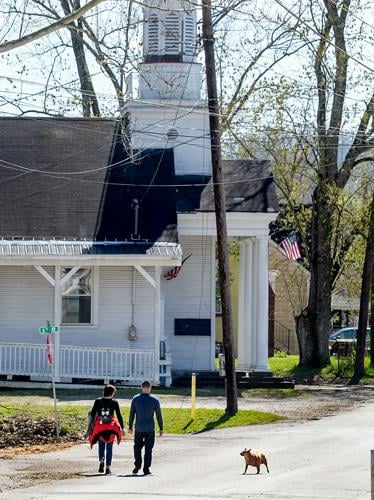
Pat Jones thinks it speaks well of his fellow North Charleston citizens that they willingly tolerated all the dogs dumped in their neighborhood so long ago.
“It amazed me these people had the heart to take in all these animals,” said Jones, a North Charleston Ward 1 City Council member. “Good people. A lot of them are gone.”
Ken Simmons has heard tales of North Charleston’s canine past. Simmons, 58, grew up in the neighborhood, just as Jones, 68, did. His grandfather handed down a not-so-benevolent version: If they wouldn’t hunt, they didn’t stick around.
We are sure of these things — dogs, a deadly cult leader and a man obsessed with walking have all played a part in North Charleston history.
A section apart
North Charleston is a confusing moniker. It’s part of Charleston but sounds like its own municipality. Looked at geographically, it is merely an extension of the West Side, with mighty Kanawha Two-Mile Creek the only divider. It is directly across the Kanawha River from South Charleston, a separate municipality.
The creek, in tandem with the added dividers of Iowa and Patrick streets, serves to set the neighborhood apart — enough so, apparently, that folks in the 1930s thought nothing of dumping their dogs into the mostly undeveloped section, spawning the name.
“Dog Town” was born. People in the Depression-riddled area did not like being referred to so unflatteringly and persuaded the city to call it “North Charleston.” As time wore on, however, nostalgists liked the original name.
North Charleston native Bob Phares even started a Facebook page, “Dogtown, WV (North Charleston)” in 2013. Its 4,400 members sometimes reminisce about something germane to North Charleston, sometimes not.
“We didn’t grow up in a bubble,” Phares said. “We went to the Kearse, went downtown. Dog Town is the main theme of the page but all of Charleston is kind of included in it.”
Phares said the dog situation stretched well into the 1960s, until the city instituted a leash law.
“You’d play ball at the old Grandview school and see dogs running in packs all the time,” he said.
In the 1950s, officials constructed Seventh Avenue, a four-lane road that, today, serves as the main artery. It connects the West Side proper to Dunbar. Mary Clendenin, 80, has lived in the same North Charleston house her whole life. She predates Seventh Avenue.
“I can remember when the road was only dirt and there was no Seventh Avenue,” she said.
Like others interviewed, she remembers the dog problem easing a good deal once North Charleston became more developed.
Simmons remembers North Charleston as a great place to grow up.
“It was beautiful, man,” Simmons said. “Ozzie and Harriet. You had a lot of middle class, up to here lately.”
These days, North Charleston is showing a little wear. Keller’s gas station has been gone for years. There is no supermarket.
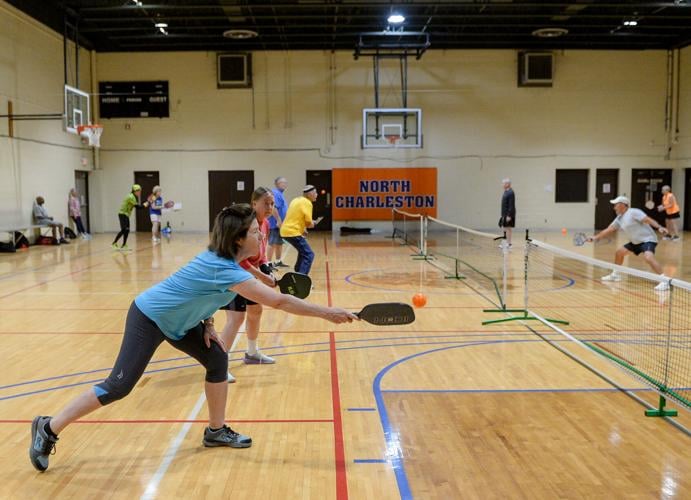
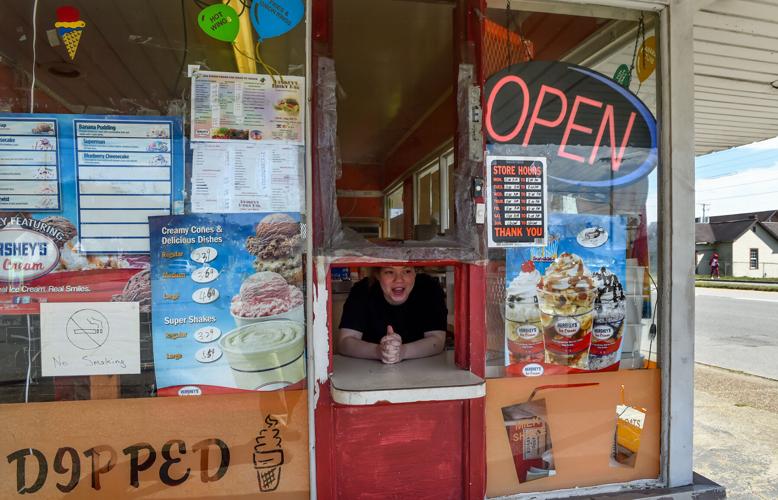
Huskey’s Dairy Bar is a holdover from the old days. The North Charleston Recreation Center still serves the community. A United States rarity is Movie Man, a store that still uses the tanning bed/DVD model to stay in business, next to a fairly new Mexican restaurant.
Jones continues to advocate for his underdog district at the Charleston City Council.
“I just want to fight for it more and more,” he said. “I love all the people. It’s just a special place. A lot of people don’t think of it that way.”
Stories you might like
- Lawmakers try again to change ‘reflection in the mirror’ for cancer patients
- NextEra changes tune on MARL project rate impacts for APCo, WPCo customers
- WV House passes data center enticement bill that would keep project details hidden
- Horrible Januaries: Charleston warming shelter had 17 straight nights of operation
Jones and Simmons feel North Charleston is often overlooked, possibly because of its location on what is really the far West Side. Jones often clashes with Mayor Amy Shuler Goodwin over how best to revive the West Side and North Charleston.
“It’s kind of a stigma; we’re not rich people,” Jones said. “I will say this: I believe Amy has tried her best to help Ward 1. She’s one of the few mayors I’ve worked with who actually knows where North Charleston is. We do butt heads, but there’s no hatred.
“It’s kind of something to be a councilman for the area you were born and raised in.”
Charlie and The Walking Man
It took Phares and his brother 13 years to build up their Facebook page to its current membership. As Phares said, the site is broader than just North Charleston. The dominant theme is nostalgia and a yearning for the good-old days.
One person waxes affectionately about the smell of the nut stand in the old Sears building. That building turned into CASCI insurance, which is all but empty now as employees prepare to move into smaller quarters and others work from home.
A post remembering the second-story Roaring ‘20s nightclub includes this comment: “Anyone else ever fallen or been helped down the steps of the ‘20s?”
But no remembrance of North Charleston would be complete without recalling the long-ago presences of Charles Manson and Sara Jane Moore. Manson’s fingerprints verify his presence here, taken when he was 8 years old as a student at Dunbar Elementary.
Although he went to school in Dunbar, Manson lived at 110 Central Ave., in North Charleston, a street that no longer exists.
Schoolchildren were routinely fingerprinted then, according to a 1942 Charleston Daily Mail article, “to aid in their identification if the need ever arose.” California authorities already had Manson’s fingerprints when he ordered the killing of Sharon Tate and others in 1969.
Moore, who tried to assassinate President Gerald Ford in 1975, was born and raised in Charleston.
One Dog Town post features a picture of Van’s, a small grocery store that used to stand at the intersection of Woodward Drive and West Washington Street. One post says Manson’s mother worked there, which she apparently did, according to store owner Van Watson.
“I sold him a lot of candy,” Watson said in a Charleston Gazette interview, describing him as “ordinary” and “nothing outstanding.”
The Dog Town post about Manson is from June Martin.
“I know [Manson] went to school with my brother, the walking man,” she said.
Ah, Hugh Martin, or The Walking Man. Anyone traveling Seventh Avenue from decades prior to and after his death in 2016 remembers Hugh’s constant walking. In a Gazette article from the era, he said excess energy drove him, once he quit drinking.
Martin said he once walked 70 miles in a day. His goal was 100.
“I walked 26 straight hours one time,” he said.
Google Maps captured Martin, whose sister posted the image to the Dog Town page. It shows Martin wearing a blue T-shirt, his trademark jean shorts and a white ball cap. The shirt often came off during the summer.
So North Charleston, or Dog Town, presses on.
“People just like to remember the way it used to be,” said Phares, who now lives in North Charleston. “When kids played baseball and they weren’t all on video machines. Most people feel it was a different era back then and people were closer. They knew their neighbors.”
CLICK HERE to follow the Charleston Gazette-Mail and receive


