
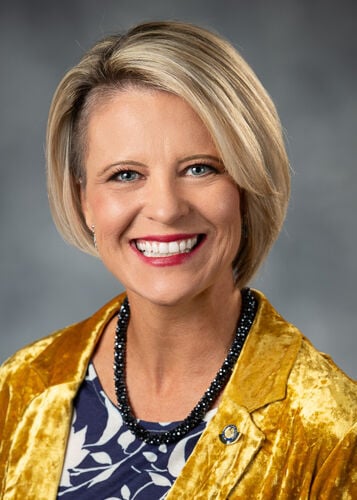

As the only woman currently serving as chair of a major committee in the West Virginia Senate, I will not sit quietly while broad accusations of misogyny are thrown at the Senate and its members.
If such a culture truly defined this body, I would know it. These claims deserve scrutiny, not blind acceptance.
We live in a time when explosive accusations can be hurled without a shred of substantiated evidence, and too often, they are. The so-called proof of legislative misogyny amounts to little more than opinion packaged as fact and amplified by commentators who preach inclusion and tolerance, but only for those who share their opinions and beliefs. If you dissent, you’re dismissed. If you disagree, you’re labeled.
The goal isn’t clarity. It is control of the storyline. So, before the term misogyny is casually weaponized yet again, allow me to offer firsthand perspective from inside the Legislature, because rhetoric is easy, but reality tells a different story.
When I was elected in 2020, I entered the Senate without prior legislative experience and without longstanding relationships within state government.
Like many women stepping into environments traditionally dominated by men, I approached the role with caution. My husband, who often accompanies me to the Capitol, shared that instinct. Public narratives frequently portray powerful men as dismissive or disrespectful toward women, and we were mindful of that perception as I began my service.
My experience, however, has been different.
From the outset, my colleagues treated me with professionalism and respect. I was struck not only by their courtesy but also by their willingness to seek and value my input on substantive policy matters. That respect extended beyond legislative debate to everyday interactions, reflecting a culture of civility toward me and the other women serving in the Senate.
Six years later, I serve on the Senate leadership team and as chair of the Senate Education Committee. These roles were earned through diligent work, relationship-building, and the trust of my colleagues. It is also worth noting that these appointments were made — and sustained — by Senate presidents, individuals who hold significant authority within the chamber.
I have served as Education Chair under two senate presidents: Craig Blair and Randy Smith.
Though their leadership styles differ, both have consistently sought my perspective not only on education policy but on broader legislative matters. I have frequently been consulted on bills, proposals and strategic decisions affecting the body as a whole.
While I cannot speak to every lawmaker's experience, I can speak to my own. I have not encountered hostility or discrimination from my male colleagues. Instead, I have experienced collegiality, support and professional respect.
What I do find concerning are opinion pieces that portray respected colleagues—such as my friend and fellow Sen. Eric Tarr, R-Putnam, as distrustful of women without substantive evidence. I am equally concerned by assertions that an increase in female candidates is necessarily evidence of widespread misogyny within the Legislature.
Political recruitment efforts ebb and flow with party strategy and opportunity; the gender of individual candidates does not, in itself, validate sweeping conclusions about institutional culture.
Hurling accusations of misogyny to rack up likes, shares, followers, or political clout is not courage, it’s opportunism. It’s the cheapest form of campaigning, and it’s flat-out wrong. Smearing an entire institution to manufacture outrage might boost engagement metrics, but it does nothing to serve the people of this state.
Voters deserve better than candidates who build their profiles by tearing others down and spreading narratives they know can’t stand up to scrutiny.
Real leadership isn’t measured in viral posts or applause from a partisan echo chamber. It’s proven through work, results and the willingness to stand on truth, even when it’s not trending. If we’re serious about progress, then we should demand leaders who elevate the conversation, not poison it for political gain.
Strong leadership is defined by character, competence and commitment, not by sex. In my experience, success within the West Virginia Senate has been determined by work ethic, integrity and the ability to build trust with colleagues. These qualities transcend gender. And that is exactly how it should be.


