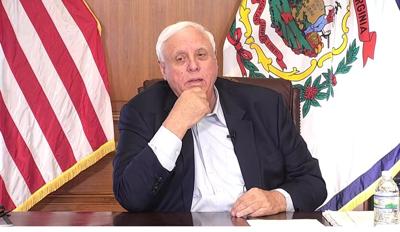
A federal judge ordered one of Gov. Jim Justice's coal companies to surrender a helicopter targeted for seizure by a British Virgin Islands firm the Justice company hasn't paid a roughly $13 million money judgment.
A federal judge ordered one of Gov. Jim Justice's coal companies to surrender a helicopter targeted for seizure by a British Virgin Islands firm the Justice company hasn't paid a roughly $13 million money judgment.
Sometimes, it’s easy to get lost in the spectacle of whatever it is that’s happening to the business empire of West Virginia Gov. Jim Justice, who also is a Republican candidate for the U.S. Senate.
When Justice was elected to his first term in 2016, his net worth was estimated at somewhere around $1.3 billion from the likes of Forbes magazine. But Forbes yanked Justice from its billionaires list not long after, when report after report surfaced concerning Justice’s mounting debts, some of them personally guaranteed by the governor and members of his family, totaling hundreds of millions of dollars. There also were unpaid taxes, government fines, legal settlements and legal fees.
Then, a bank that hadn’t gotten anywhere with Justice or his businesses sought to garnish his salary as governor to recoup losses, while another was authorized by a federal judge to seize and sell a company helicopter to recover debts owed. Justice (or someone working for him) having the helicopter moved to another state before the initial seizure was supposed to take place added a farcical element to the whole thing.
The picture that emerges is one of Justice limping from room to room as a mob of debtors nips at his heels, with the film sped up and “Yakety Sax” providing the soundtrack, a la “The Benny Hill Show.”
What gets forgotten, especially with the sheer volume of cases and incomprehensible amount of money involved, is that this isn’t just about faceless creditors or financial institutions that might already be amply wealthy getting stiffed (not that such a thing should excuse someone like Justice from paying what he owes). Justice’s business shenanigans hurt real people.
Last week, Gazette-Mail reporter Mike Tony wrote about how frequent lapses in health insurance coverage at Justice’s coal businesses often left a former employee receiving chemotherapy treatments in the lurch. In fact, that former employee, 70-year-old Pinkey Mullens, told Tony there had been disruptions in his health insurance prescription coverage for years. Mullens said he worked for Justice “like a dog” at Double Bonus Coal Co., and feels the way the governor has handled his businesses and what it has done to employees is, at the very least, very disrespectful.
“I do not feel sorry for him,” Mullens said of Justice’s current financial woes. “I hope he has to pay every penny, plus penalties. That’s what I hope.“
The inability or, perhaps, refusal of Justice-owned interests to pay property taxes has also hurt communities in the southern part of the state, where economies are already pretty much a bust, thanks to the decline of the coal industry.
Tony reported that Justice owed more than $400,000 in delinquent taxes on hundreds of properties that were eventually sold at auction last year. The delinquencies represented a lot of lost revenue for these communities. Many of the properties were in McDowell County, which has one of the highest poverty rates not just in West Virginia, but the entire United States.
Failure by Justice and his businesses to pay fines and fees on mining violations also hurt the state’s environment, which affects not just wildlife but the people living near those mines.
Sure, there’s a lot to gawk at when it comes to Justice’s situation. But there’s a whole lot of fallout that people don’t always see. It might not be as fascinating as a train wreck, but it’s just as bad — if not worse.