Sunshine and clouds mixed. A stray shower or thunderstorm is possible. High 79F. Winds SSW at 5 to 10 mph..
Tonight
Partly cloudy this evening followed by increasing clouds with showers developing after midnight. Low around 65F. Winds light and variable. Chance of rain 40%.
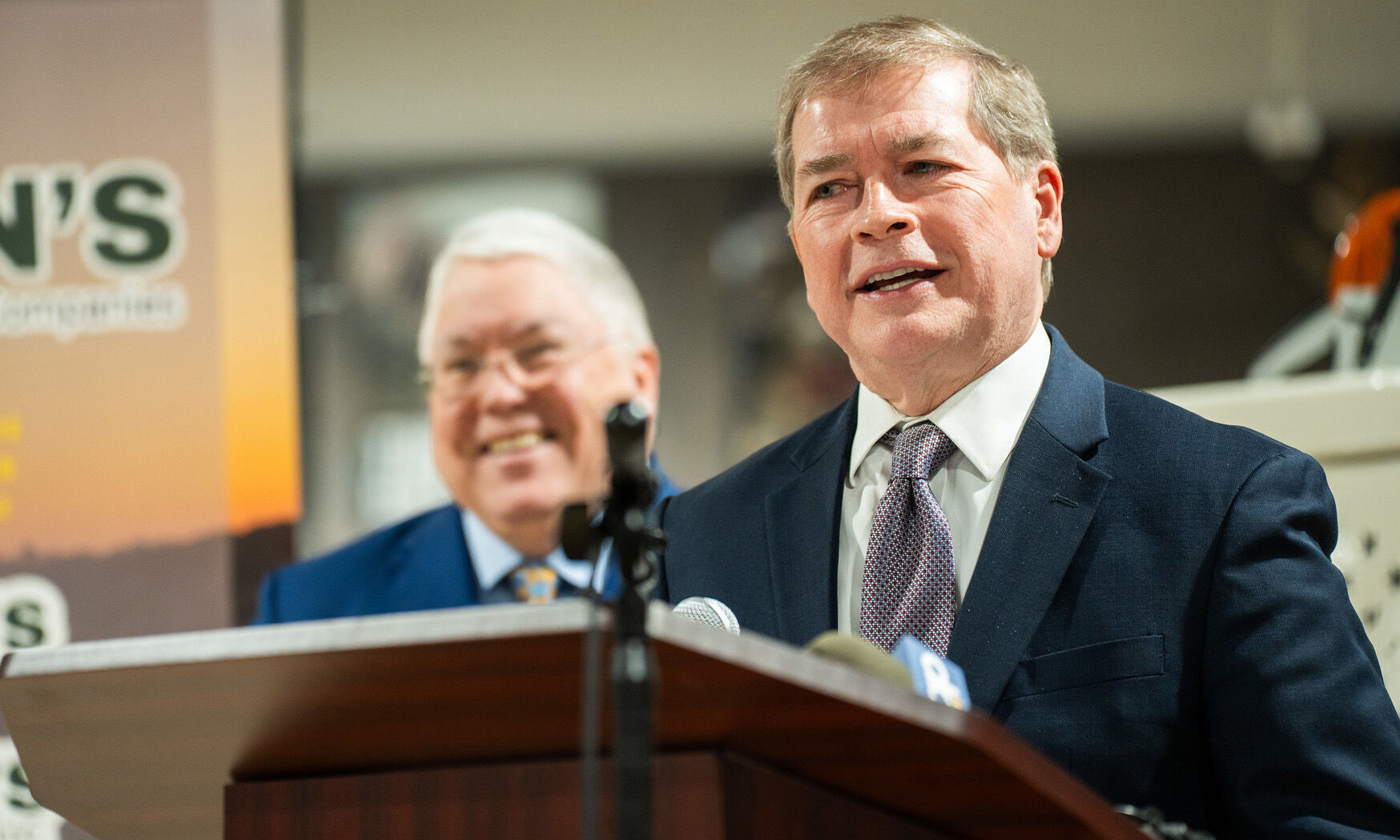
Anti-tax advocate Grover Norquist (foreground) and Gov. Patrick Morrisey are shown, on Thursday, Jan. 29, 2026, at Green’s Supply Depot in Parkersburg.
Earlier this month, we authored an editorial about Patrick Morrisey's proposed 10% income tax cut, and previous income tax cuts, pointing to drastic tax cuts in Kansas as an example of how that could go terribly wrong.
Specifically, we focused on Morrisey's appearances with economist Grover Norquist, one of the architects
behind the Kansas experiment, as a bad sign for the Mountain State.
In a responding op-ed published in the Gazette-Mail on Feb. 12, Jonathan Williams, president and chief economist at the American Legislative Exchange Council — which provided model tax cut legislation to Kansas — argued the problem wasn't the tax cuts. The reason the Kansas experiment failed, he argued, was the state government didn't rein in spending enough to offset the massive drop in revenue.
Say it was. If so, West Virginia is going to have an even bigger struggle if it keeps hacking away at the income tax.
Bear in mind the income tax was already slashed under previous Gov. Jim Justice, and the Legislature put in a clause to further reduce the tax if revenue numbers continued to hit certain benchmarks, which they did at least once. By the time Justice headed to the U.S. Senate, the income tax -- the state's largest source of revenue -- had been cut by more than 25%.
Now, Morrisey wants 10% more shaved off, even though state revenue is not predicted to hit the mark that would trigger another cut automatically. That seems like a failure to rein in cutting, not spending.
And where, exactly, is there fat in state government to cut? Public schools are in crisis, dealing with teacher shortages, low wages and numerous consolidations because of dropping enrollment. The Legislature is even considering cutting the Hope Scholarship, which is budgeted to dole out $230 million to help students cover the cost of going to a private school or homeschooling.
There's no room to cut in the Division of Corrections and Rehabilitation, which, for years, had staffing shortages so bad that the West Virginia National Guard had to be called in to help run jails and prisons.
Infrastructure needs investment. Child Protective Services and the foster care system need investment. There aren't many departments that are bursting with cash, especially considering Justice kept budgets flat from year to year to artificially boost revenue to justify tax cuts.
Williams points out how other states have been able to cut taxes and put spending restraints in place, meeting with success.
That's all well and good, but West Virginia isn't North Carolina, or Georgia or Utah. It's a small state with a declining population. The tax base is shrinking. The idea that cutting the income tax will spur growth hasn't been borne out, thus far.
Perhaps other states can afford to cut taxes and reduce government services. West Virginia isn't one of them. West Virginians rely more on state and federal help than any other state. One could argue that's a problem that needs to be addressed, which is fine. But cutting services to the point they can't properly function doesn't mean a rural state with poor infrastructure and the worst quality of life in the nation will suddenly find a magic solution in the private sector or by reaching for metaphorical bootstraps.