Sunshine and clouds mixed. A stray shower or thunderstorm is possible. High 79F. Winds SSW at 5 to 10 mph..
Tonight
Partly cloudy this evening followed by increasing clouds with showers developing after midnight. Low around 65F. Winds light and variable. Chance of rain 40%.
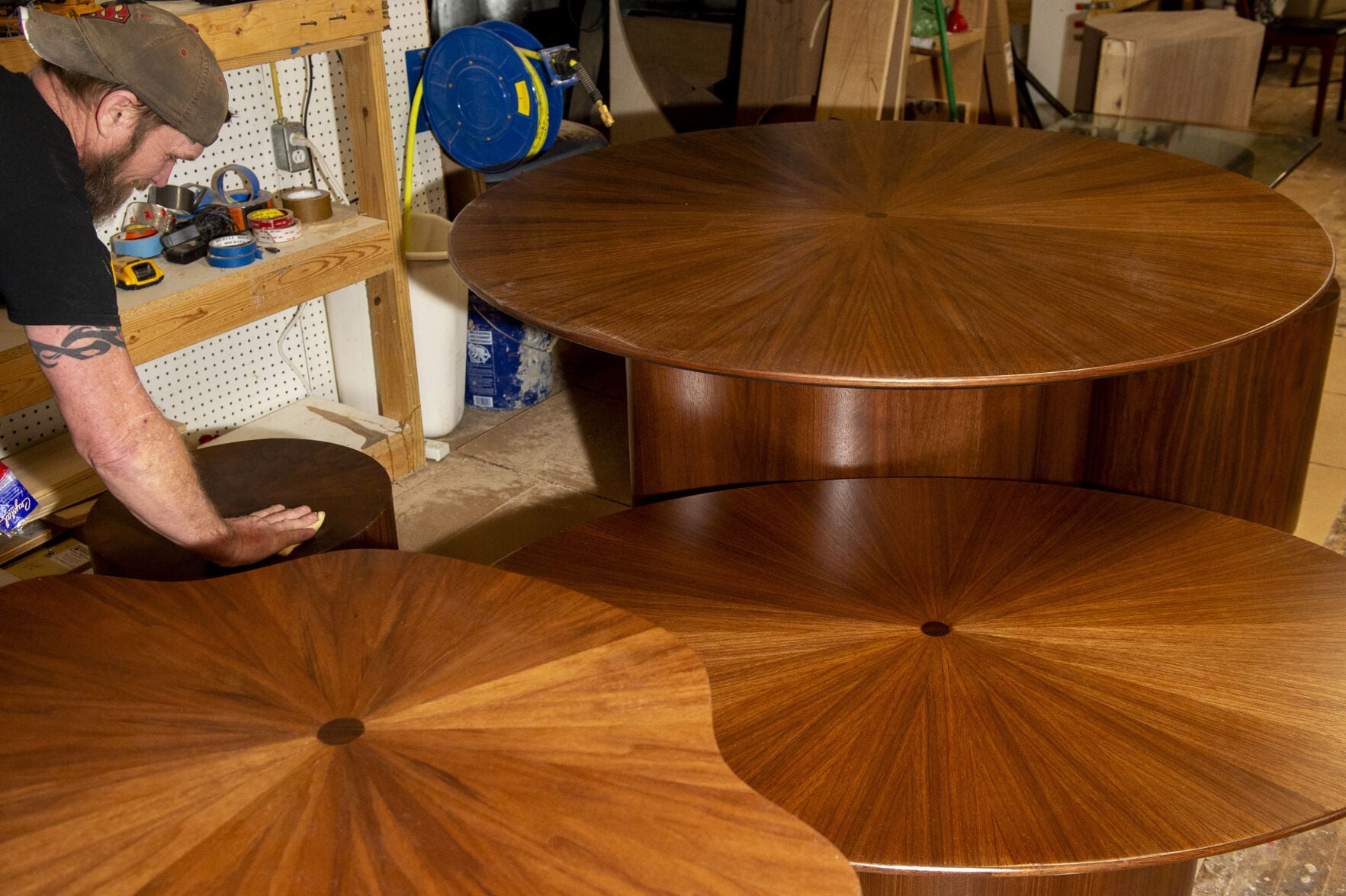
Chris Abrams wipes off a side table in the workshop of History Never Repeats, in South Charleston, on Tuesday, Feb. 3, 2026. Abrams has worked as a carpenter for History Never Repeats for seven years.
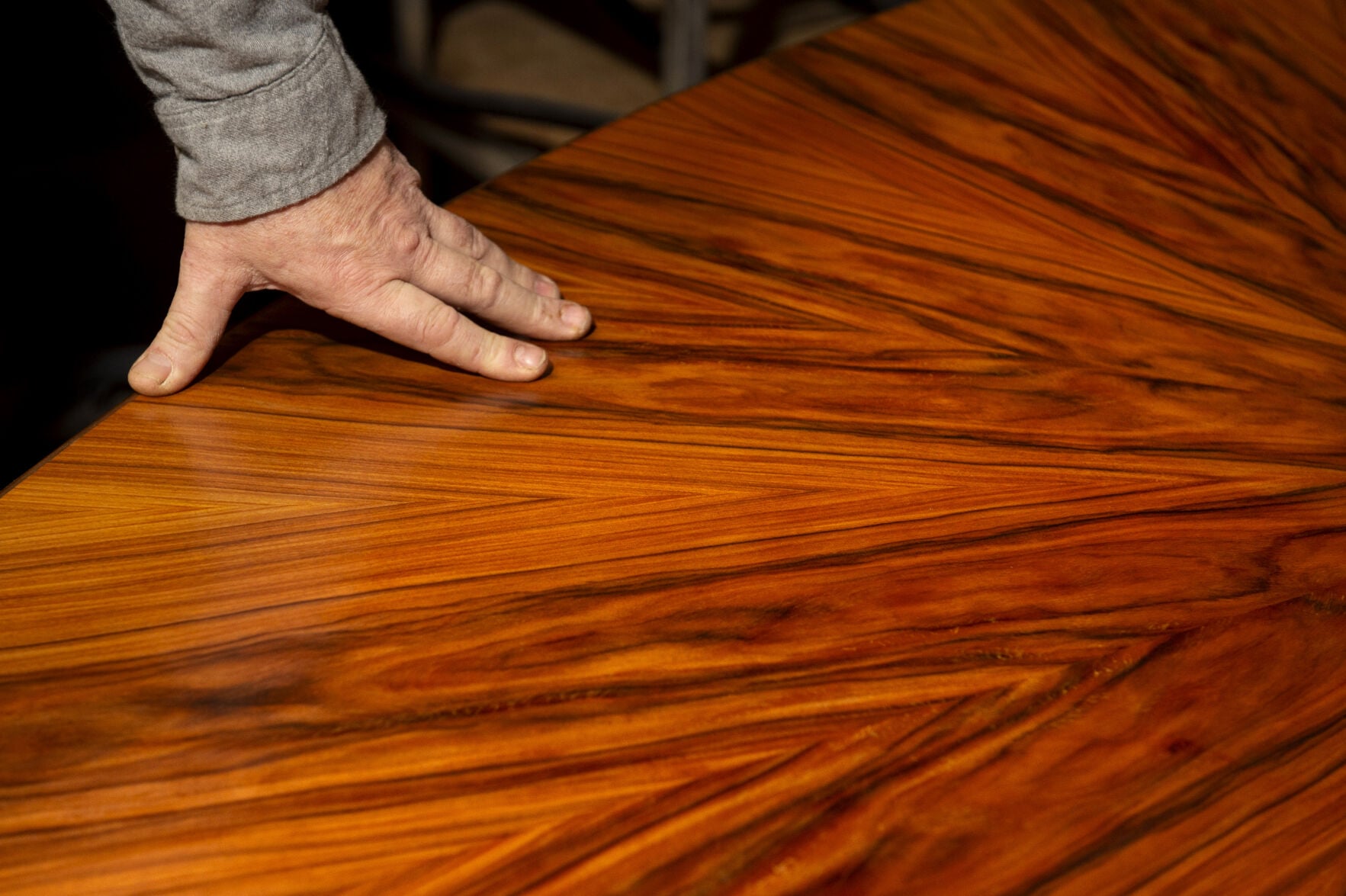
Aaron Saxton touches a table with a starburst design in the workshop of his carpentry business, History Never Repeats, in South Charleston, on Tuesday, Feb. 3, 2026.
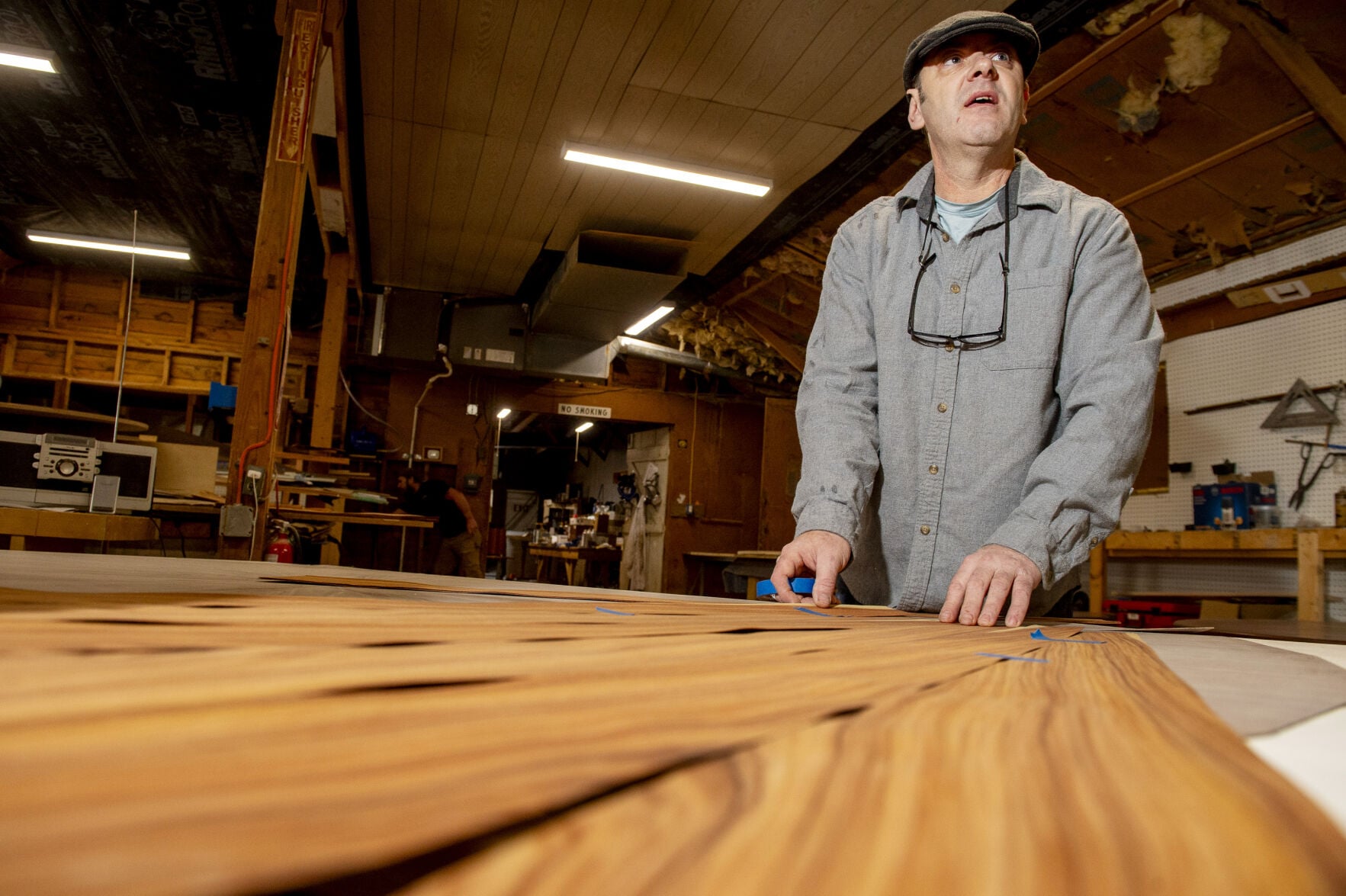
Aaron Saxton explains the process of laying wooden veneer down on a table in his workshop for his carpentry business, History Never Repeats, in South Charleston, on Tuesday, Feb. 3, 2026.
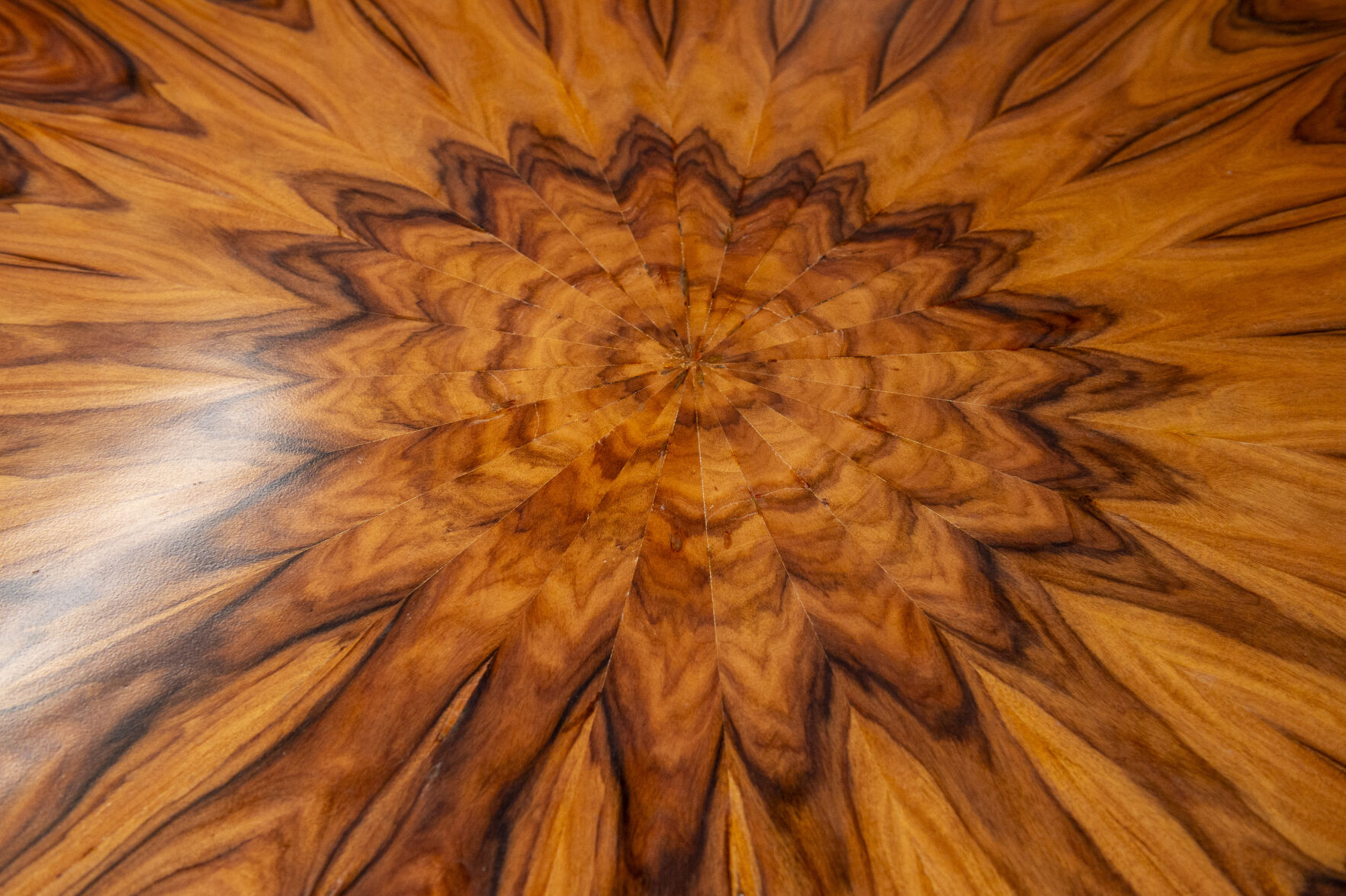
This rosewood table with a starburst design was created in the workshop of History Never Repeats, in South Charleston. It is seen Tuesday, Feb. 3, 2026.
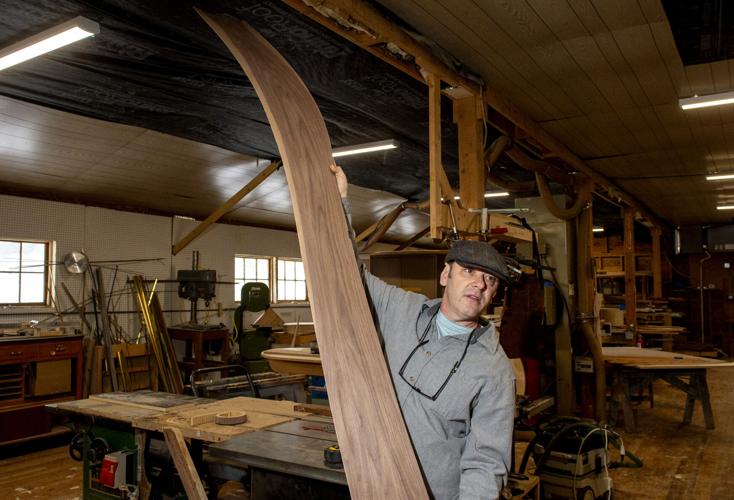
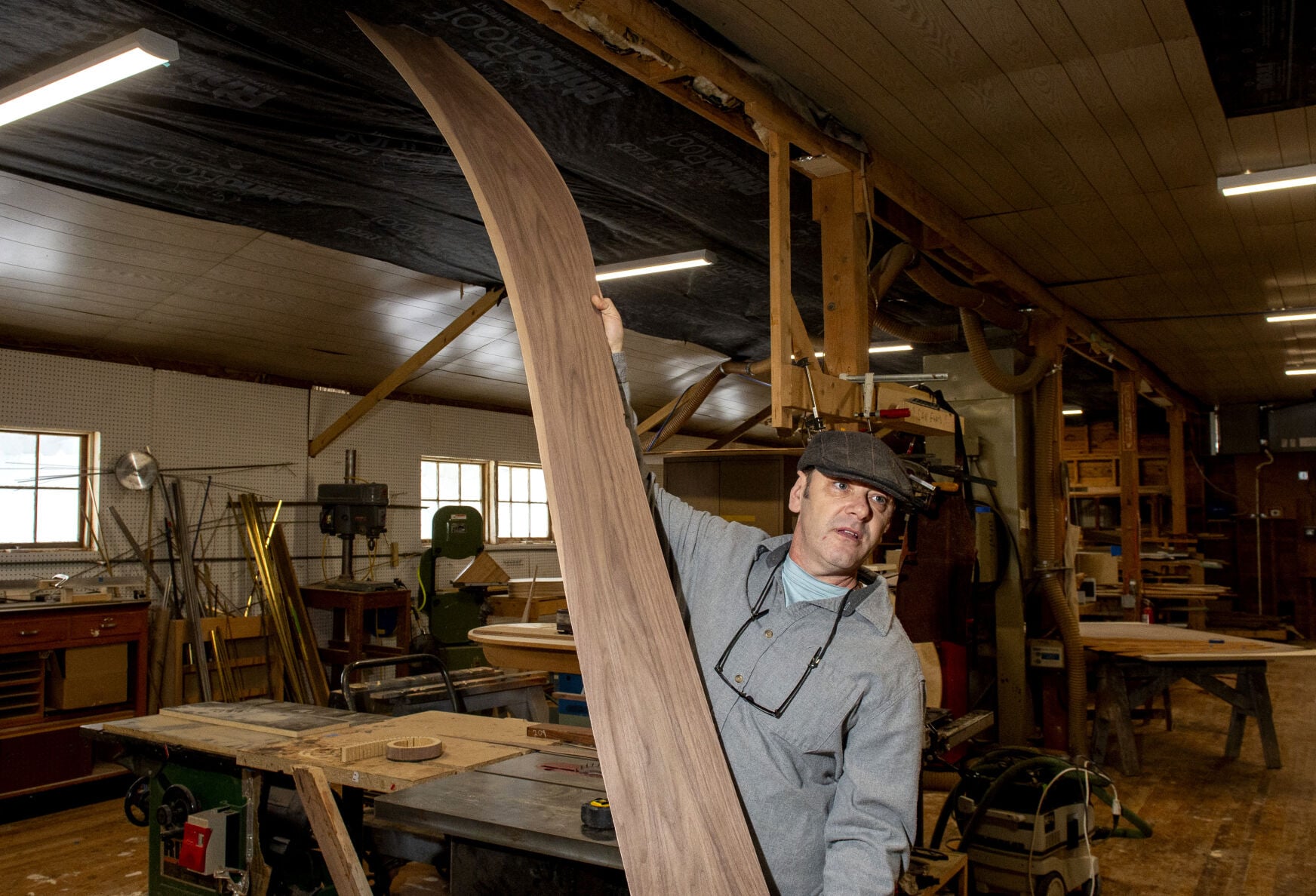
Aaron Saxton holds a board of walnut wood veneer in the workshop of his carpentry business, History Never Repeats, in South Charleston, on Tuesday, Feb. 3, 2026.
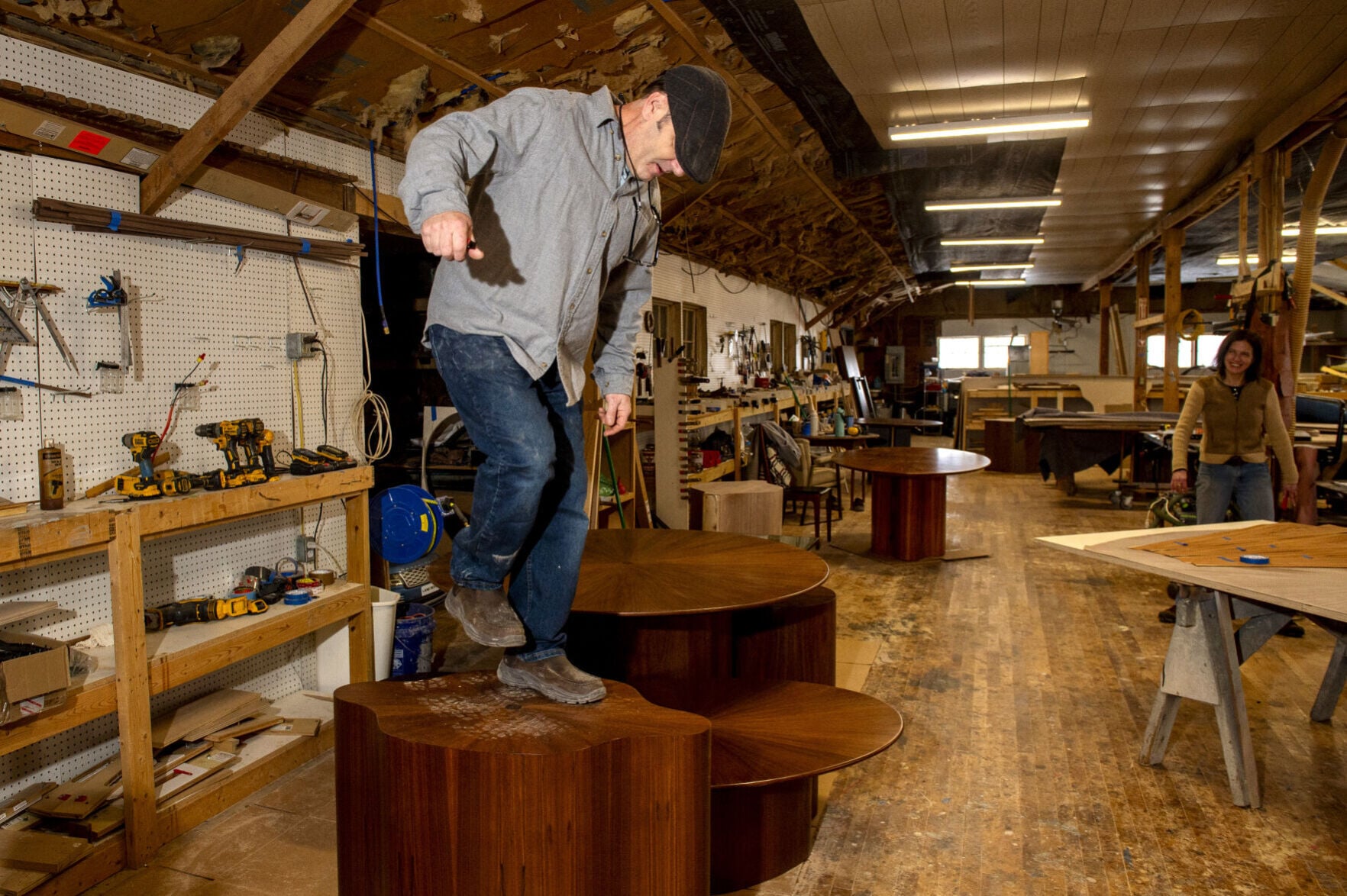
Aaron Saxton jumps on a side table as his wife, Maria Armada, watches with amusement in the workshop for their carpentry business, History Never Repeats, in South Charleston, on Tuesday, Feb. 3, 2026.
Aaron Saxton jumps on a side table as his wife, Maria Armada, watches with amusement in the workshop for their carpentry business, History Never Repeats, in South Charleston, on Tuesday, Feb. 3, 2026.
LAURA BILSON | Gazette-Mail
Editor's note: This story has been updated with more details on why Saxton doesn't use solid wood.
Aaron Saxton builds wooden tables so sturdy he feels perfectly comfortable jumping on them.
“Why can’t you do that to a normal table?” he asked, leaving dusty boot prints on the top of one of his new coffee tables. “It must be made out of junk if you can’t do that.”
The South Charleston carpenter, originally from New Zealand, and his wife, Maria Armada, started their business, History Never Repeats, to refinish and sell mid-century furniture Armada found.
They’re impressed by the quality of mid-century furniture and worry that it’s getting a bad reputation because of furniture manufacturers who are copying the design using cheap materials for modern consumers.
“Back then ... when you bought furniture, you were buying it for life,” said Armada, who is from South Charleston. “It could be [as] expensive as a car to [buy] furniture for your house.”
Aaron Saxton touches a table with a starburst design in the workshop of his carpentry business, History Never Repeats, in South Charleston, on Tuesday, Feb. 3, 2026.
LAURA BILSON | Gazette-Mail
Saxton became interested in the construction and design of the furniture and learned from Ed Hillenbrand, a South Charleston woodworker.
According to Armada, creating new furniture designs is difficult, since manufacturers in Asia replicate the designs and sell them cheaper.
So, Saxton began building custom wooden doors in 2015, which took too much work to be duplicated by other manufacturers.
Some of the doors have a sunburst look with wood triangles radiating from the door handle. It was this sunburst idea that led Saxton to his current project — radial pattern tables.
Aaron Saxton explains the process of laying wooden veneer down on a table in his workshop for his carpentry business, History Never Repeats, in South Charleston, on Tuesday, Feb. 3, 2026.
LAURA BILSON | Gazette-Mail
The tables — which took eight prototypes over six months to get right — feature triangular cuts of wood veneer radiating from a small central circle, similar to slices of a pizza, Saxton said.
This concept is not new to tablemaking or furniture design, but it’s Saxton’s number of triangles that sets the tables apart. He said the fewer the number of triangles in the wood, the more geometric the tables look. While that pattern is not bad, Saxton said, he prefers a different look.
“Wood’s supposed to flow,” he said. “It’s supposed to organically move with your eye.”
Instead of seeing triangles, he sees “a ribbon or wave” flowing through the wood, connecting the pieces together.
Aaron Saxton holds a board of walnut wood veneer in the workshop of his carpentry business, History Never Repeats, in South Charleston, on Tuesday, Feb. 3, 2026.
LAURA BILSON | Gazette-Mail
The tables take a week to make in their 6,000-square-foot workshop in South Charleston.
First, Saxton inspects the thin sheets of lumber, such as rosewood and walnut, he gets from throughout the country. The sheets come from old-growth trees that are too valuable to cut into lumber. Some come from a sawmill north of Sissonville.
“We have to make sure every single sheet is blemish-free,” Saxton said, showing off some new 10-foot pieces of walnut he has in stock.
Blemish-free means there were no branches on the length of the wood to create knots. The wood typically comes from between the tree's roots and its first branches.
While the wood sheets, or veneers, are thin, they are still several times thicker than veneers that cover cheap furniture. Those veneers are often thinner than a sheet of paper, Saxton said, explaining that doubling the thickness of a veneer quadruples its strength.
"It's given the art of veneering a bad name because, when someone hears the word ‘veneer,’ now they think it's made out of something that's lesser, where it's supposed to be something that's great,” he said.
For example, Saxton’s veneers are of such quality that they could be sanded down and refinished years after production, if someone wanted.
"That's why furniture used to last," Armada said. "You sanded it and redid it."
Furniture can be made of solid wood, but the wood can buckle over time, Saxton said. While there are West Virginia woodworkers making quality solid-wood furniture, the patterns Saxton makes aren't possible without using veneers, he said.
“ The idea of putting a quality veneer on top of a quality substrate is actually the most difficult way to make furniture,” he said.
Saxton typically uses a specialty plywood for a substrate.
Chris Abrams wipes off a side table in the workshop of History Never Repeats, in South Charleston, on Tuesday, Feb. 3, 2026. Abrams has worked as a carpenter for History Never Repeats for seven years.
LAURA BILSON | Gazette-Mail
After inspecting the wood, Saxton and History Never Repeats employee Christopher Abrams cut it into the triangles and lay them out in the radial pattern.
The “trick,” which Saxton didn’t reveal, is how he makes the cuts.
Then, the pattern is trimmed to the shape of the piece of wood that makes up the inner core of the table, called the substrate. There are circular and asymmetrical shapes.
Veneers also cover the base, with Saxton designing them so the point where the wood grain starts and finishes isn’t noticeable.
The wood is glued to the substrate and put into a vacuum machine for several hours to affix the two pieces together.
“Those little details just take all this time and effort," Saxton said, "but they do ... result in longevity.”
This rosewood table with a starburst design was created in the workshop of History Never Repeats, in South Charleston. It is seen Tuesday, Feb. 3, 2026.
LAURA BILSON | Gazette-Mail
So far, History Never Repeats has sold tables to clients in Texas, Michigan, New York and Connecticut. Saxton said most of the market for the doors and tables is out of state. One customer in Charleston does have the custom doors.
Right now, the shop has eight tables available for purchase online. The prices range from $2,750 to $22,250.
Saxton also is making custom versions of his tables. One is going to Taylor Books, in downtown Charleston.
“I can tell it’s already going to do OK, from the feedback we’ve already got from people,” Saxton said. “I really hope, at the end of the year, I’ve got more people working for me and I’ve got a nice export thing for West Virginia.”
He also hopes to one day add other types of furniture to his creations. He started with tables because they’re “practical.”
Saxton said West Virginia has the nice lumber needed for his work and a cost of living where he can afford to have a workshop and make the tables.
“You can’t have a 6,000-square-foot workshop anywhere in California and not be forced to make what you don’t want to do,” he said.
Armada said the same is true of most other states: “You can’t take risks, you can’t experiment, you can’t be creative.”
CLICK HERE to follow the Charleston Gazette-Mail and receive