
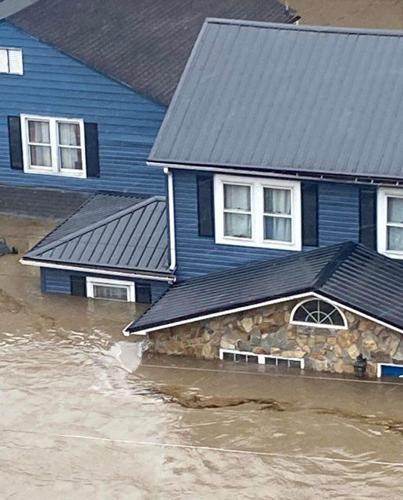


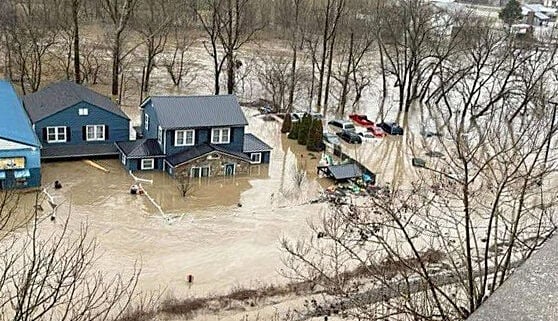
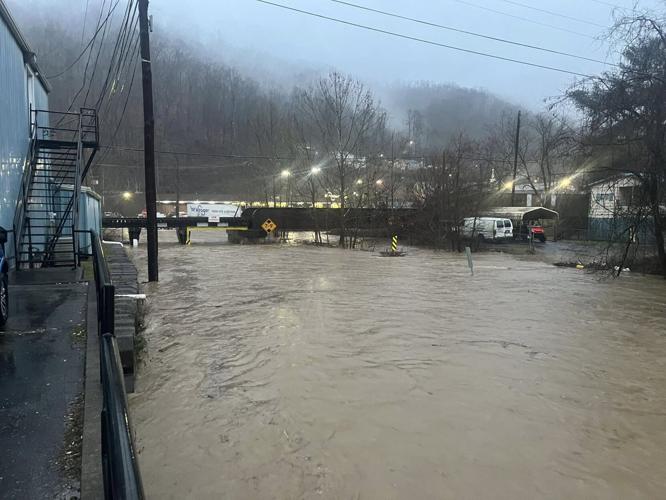
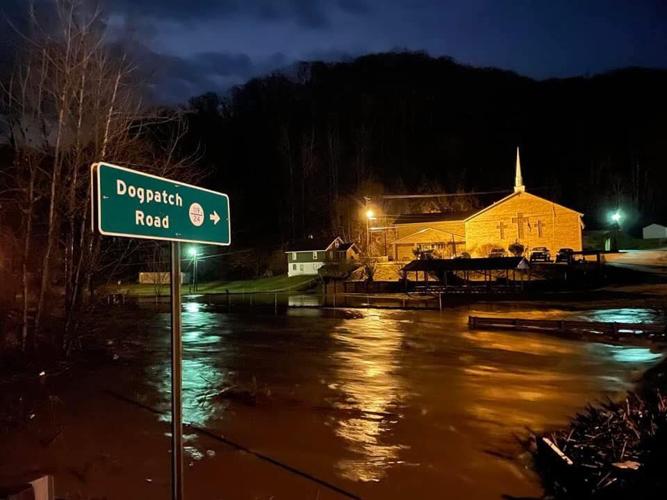
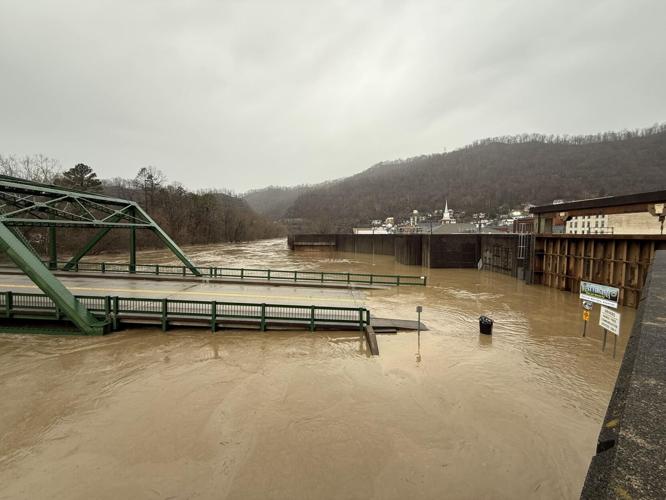
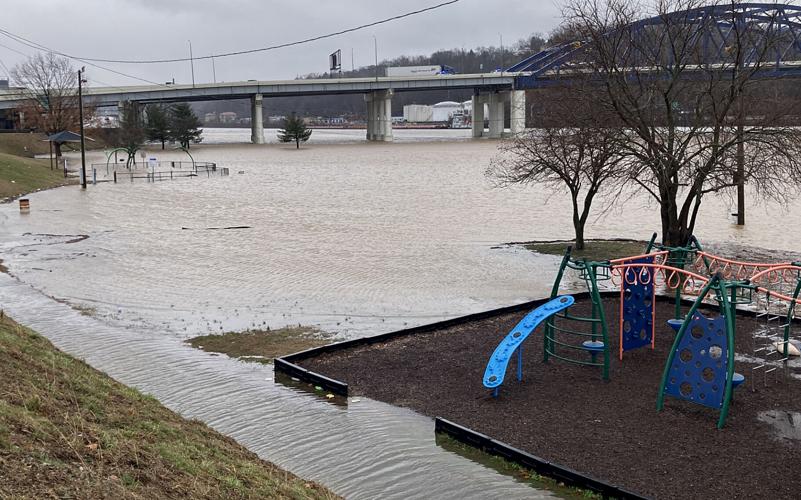
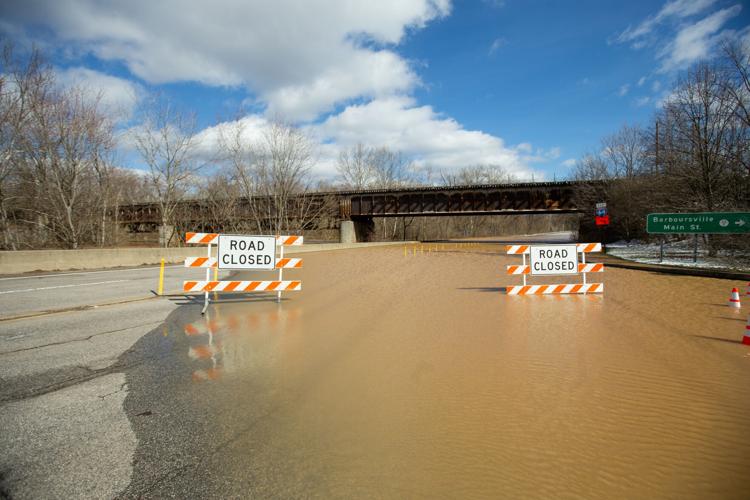
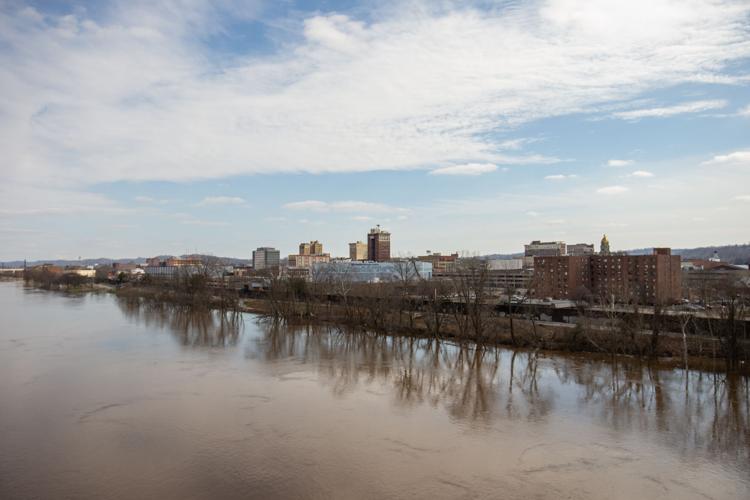
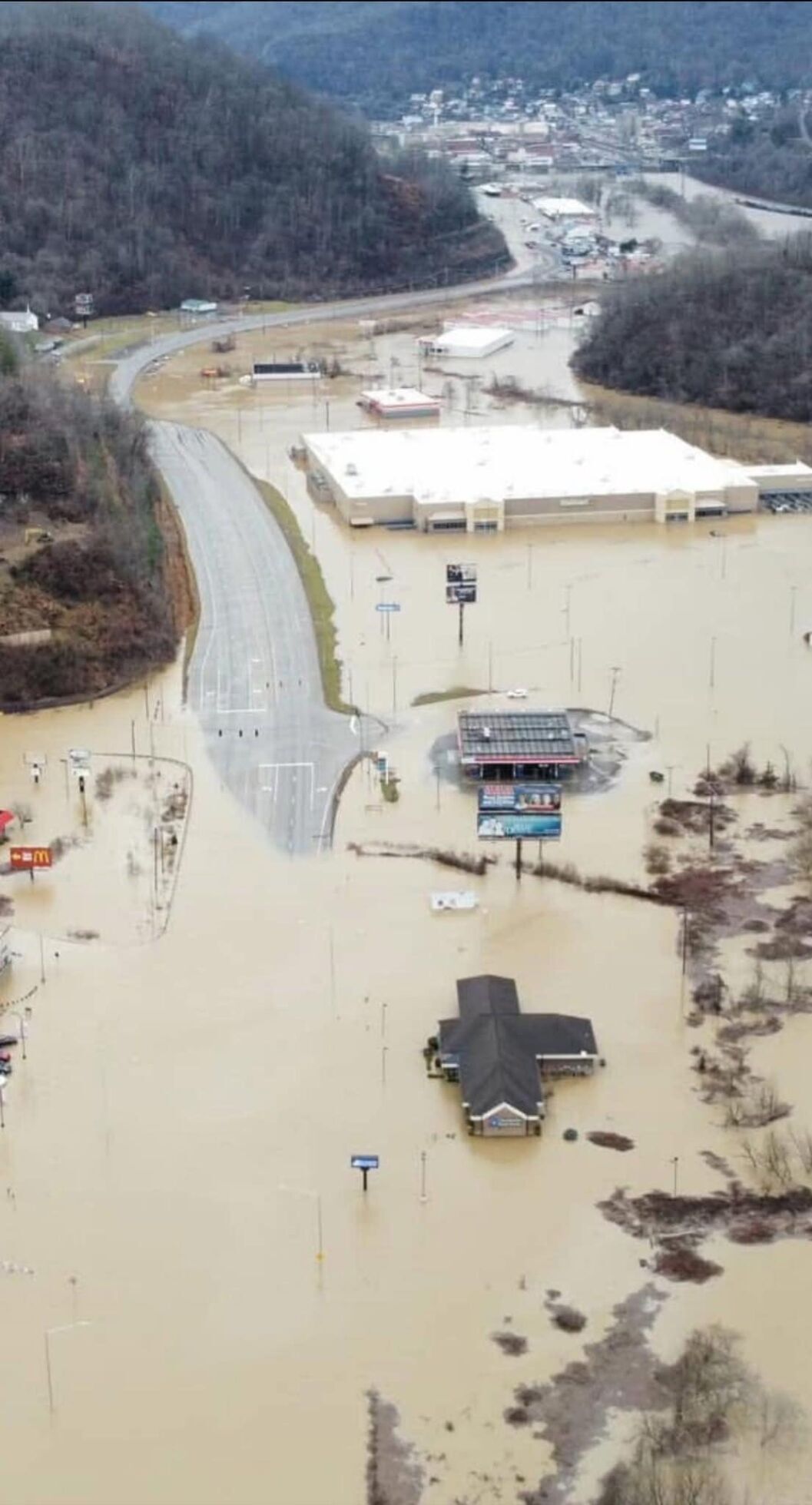
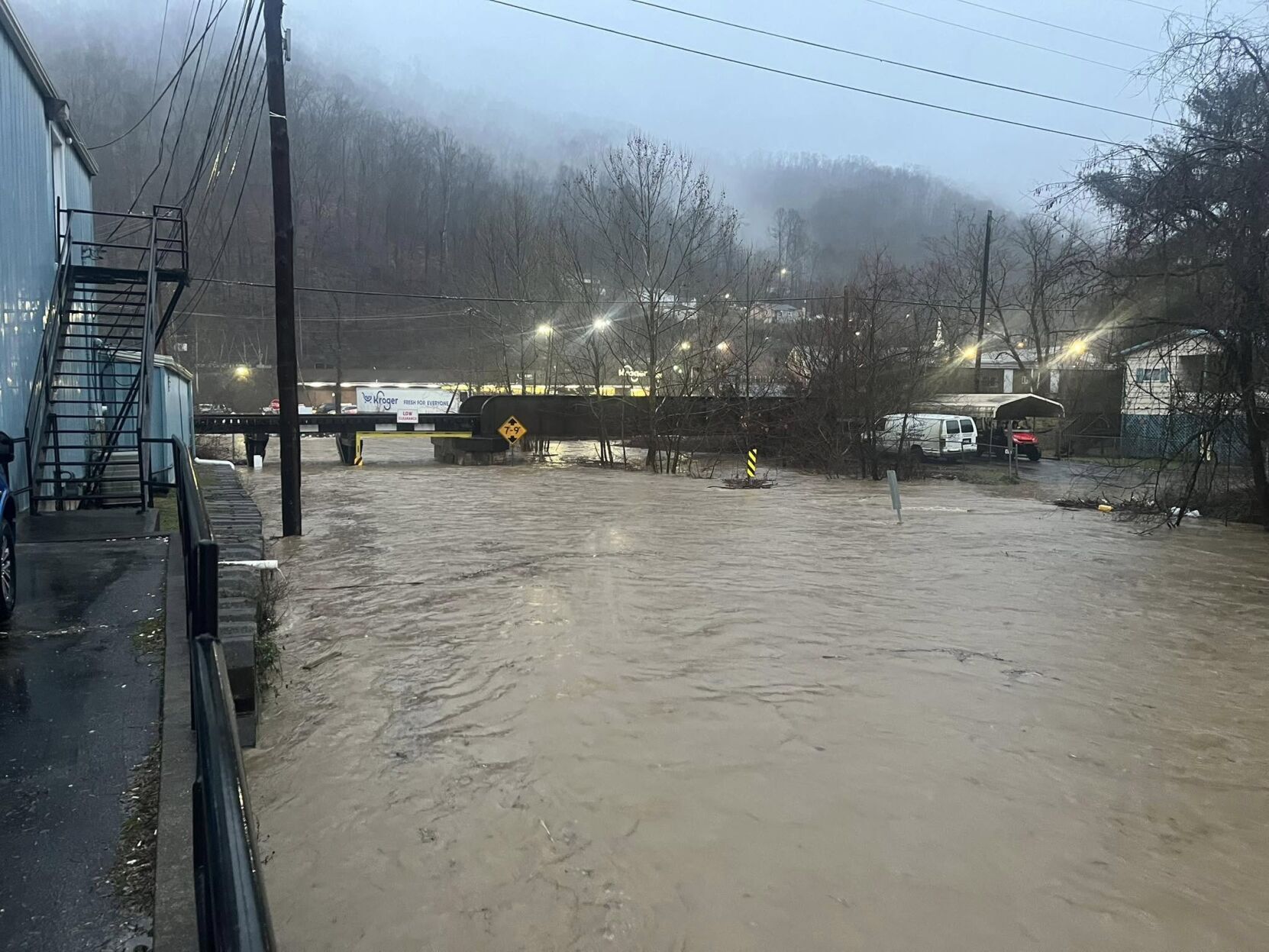
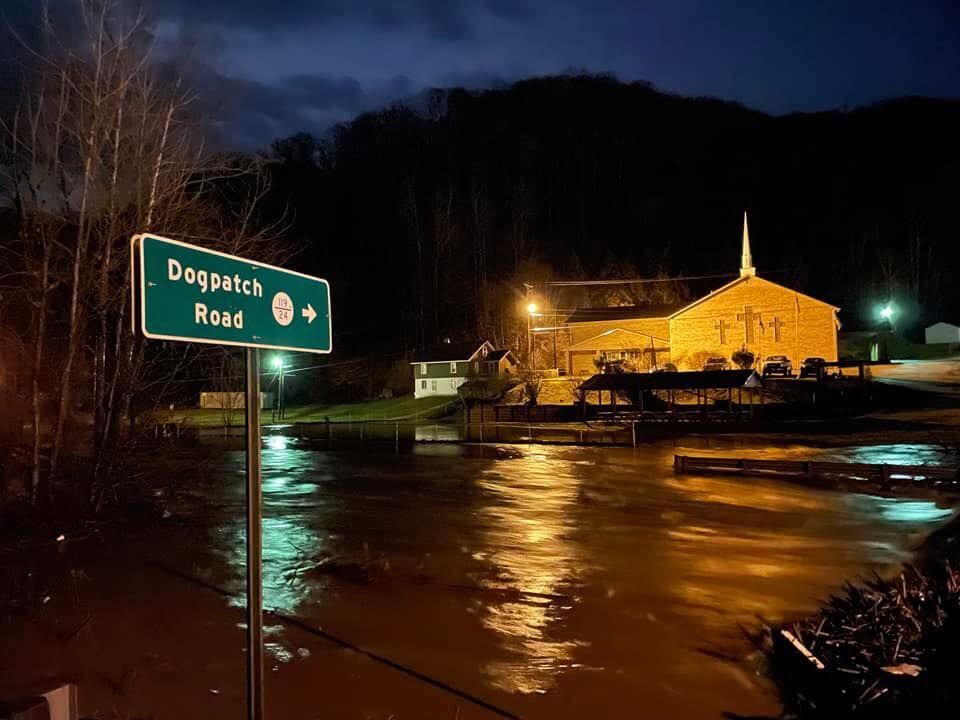
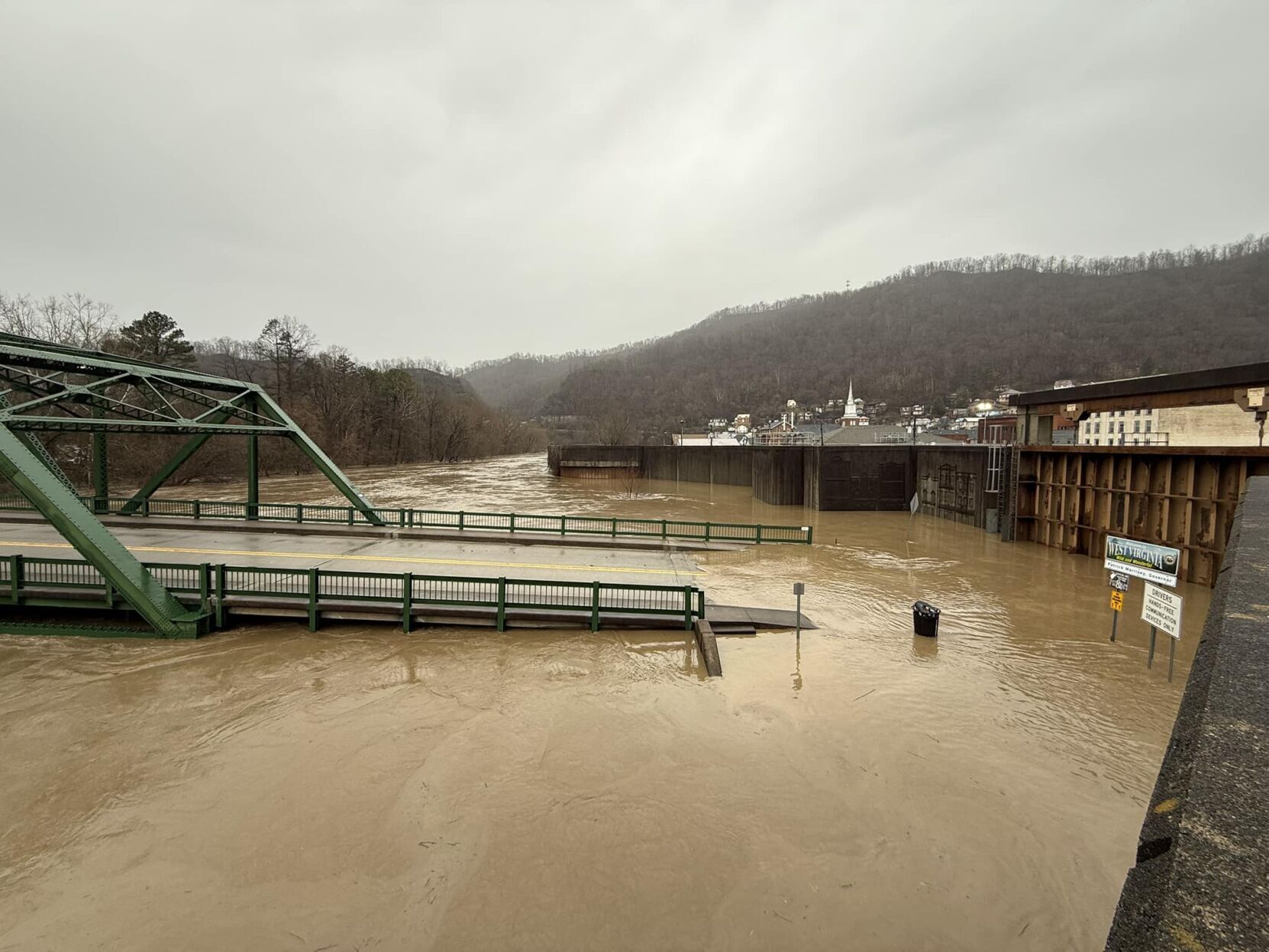
Williamson floods on Feb. 16, 2025.
BABYT SEXTON | Courtesy file photoIn 2003, flooding washed off five acres of Maria Gunnoe’s Boone County land, taking out two bridges and killing one of her dogs.
“It destroyed everything,” Gunnoe remembered in a phone interview Sunday.
Gunnoe learned the value of the Federal Emergency Management Agency, which supported her with $750 after she reported her damages and another $5,000 after a damage assessment that helped pay her bills and buy food.
A longtime community organizer, Gunnoe, of Bob White, Boone County, is connecting flood-impacted southern coalfield residents with the American Red Cross after she realized FEMA aid wasn’t immediately available after flooding devastated the region over the weekend of Feb. 15-16.
The flooding left at least three people dead in McDowell County, including a 2-year-old boy.

- Staff reports
- 9 min to read
Gunnoe said 16 people are living in one double-wide mobile home in Williamson due to flooding damage.
“There were other homes that were washed away, and they all escaped into one double-wide,” Gunnoe said.
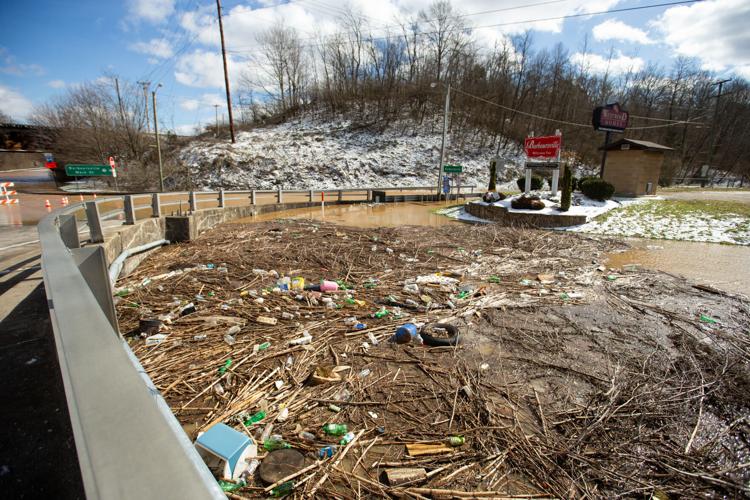
In McDowell County and other southern coalfield counties, impacted residents lack clean water to clean up, having had to contend for years with failing water and wastewater infrastructure.
Families have lacked power and potable water while being at risk of hypothermia after a deep freeze set in after the flood.
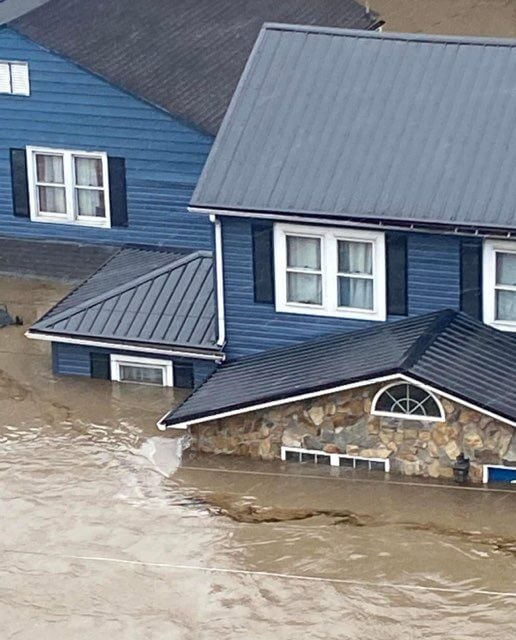
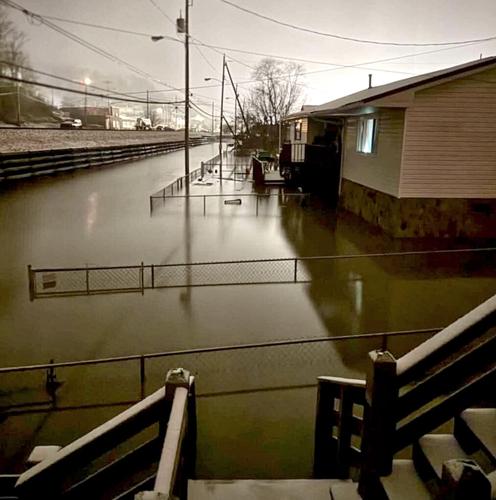
BabyT Sexton said she took this photo on Feb. 16, 2025, of her aunt and uncle’s Williamson home deluged by floodwater.
BABYT SEXTON | Courtesy photo“They really just don’t know how desperate we are down here,” said BabyT Sexton of Williamson, whose aunt and uncle lost their home to the flooding.
It’s a situation Gunnoe and other community advocates say won’t get better on its own.
“The job is much bigger than any single state when something like this comes through,” Gunnoe said.
But President Donald Trump’s administration has not yet granted Gov. Patrick Morrisey’s Feb. 17 request for a Major Disaster Declaration, a move that would provide a broad set of federal assistance programs for individuals and public infrastructure, including funding for emergency and permanent work.
One Major Disaster Declaration has been granted in the month-plus since Trump retook office Jan. 20 after the Biden administration granted eight during its final month, according to FEMA records.
The new Trump administration also has granted just one Emergency Declaration — a different type of declaration that unlocks federal assistance for emergency services capped at $5 million. That declaration was issued Feb. 16 for Kentucky, which also received this Trump administration’s first Major Disaster Declaration Monday.
But Kentucky and Virginia, like West Virginia, have been waiting for Major Disaster Declarations for their states after their governors likewise asked for them following the same winter storms and flooding.
Major Disaster Declarations often take months for the federal government to issue after severe weather events, but Emergency Declarations typically have come just days after such events.
Declaration support has dried up under Trump
There were four Major Disaster Declarations for West Virginia in 2024, with 2,430 applications approved for Individual Assistance, a FEMA program that provides funds directly to eligible individuals and families after a Major Disaster Declaration. Just over $16.2 million in total individual and household dollars were approved through FEMA across those four disaster declarations.
But in the first weeks of the new Trump regime, the FEMA has been dogged by layoffs and uncertainty over its long-term future. More than 200 employees were fired, per national reports, in line with Trump’s consideration of eliminating the agency — an act that would require legislative action.
Project 2025, a proposed presidential transition project overseen by past and present Trump administration officials before his reelection, proposed shifting the majority of FEMA emergency preparedness and response costs to states and localities.
The Project 2025 playbook, which the Trump administration has largely followed so far, calls for privatizing the FEMA National Flood Insurance Program and eliminating most Department of Homeland Security grant programs. The Project 2025 document cites what it called a “bloated DHS bureaucracy and budget.”
Further firings are expected to target the wing of FEMA that manages the National Flood Insurance Program and provides preparedness grants to state and local governments as well as first responders.
FEMA, the Department of Homeland Security and West Virginia Emergency Management Division did not respond to requests for comment.

- By Mike Tony mtony@hdmediallc.com
- 5 min to read
“The real world costs of cutting or eliminating federal disaster relief programs is being made clear in Appalachia right now,” Dana Kuhnline, senior program director of ReImagine Appalachia, said in an emailed statement Wednesday.
“I don’t think we’re capable of rebuilding roads, because that’s another thing, we’re not just talking about homes, we’re talking about cars, we’re talking about bridges, we’re talking about roads to get to homes,” Gunnoe said. “If they want us to leave, just let us know. There’s no reason to abuse us.”
‘Too much for a state to be able to handle’
Morrisey struck a similar note at a Feb. 18 news conference, saying the state asked for help from the federal government because it seemed necessary.
“I try not to ask for things unless I actually want them and the state needs them,” Morrisey said.
But Morrisey, an ardent Trump supporter, declined to say during the news conference whether he was concerned about the Trump regime’s consideration of dismantling the FEMA.
“I think it’s important for people to know that the way the process is supposed to work is that the local folks are out in front,” Morrisey said.
Spokespeople for Sen. Jim Justice, R-W.Va., Rep. Carol Miller, R-W.Va., and Rep. Riley Moore, R-W.Va., did not respond to requests for comment on whether they support Trump’s moves to fire hundreds of FEMA employees and concerns FEMA staff in the agency’s grant programs and flood insurance program may be terminated.
Sen. Shelley Moore Capito, R-W.Va., chair of the Senate Environment and Public Works Committee, said during a news conference Thursday she doesn’t see a scenario in which responsibility for “all disaster relief goes to the states.”
“I think there’s just too much — in some of these disasters that are very large — too much for a state to be able to handle,” Capito said.
Capito recalled timely FEMA responsiveness to flooding that ravaged West Virginia in June 2016, leaving 23 dead and temporarily displacing more than 2,000 people.
Then-President Barack Obama issued a Major Disaster Declaration two days after that flood hit the state.
“That’s why this declaration is really important to be able to get FEMA there as quickly and as rapidly and as effectively as possible,” Capito said.
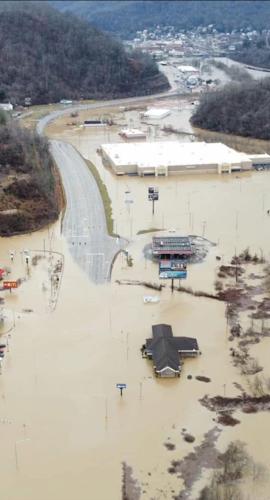
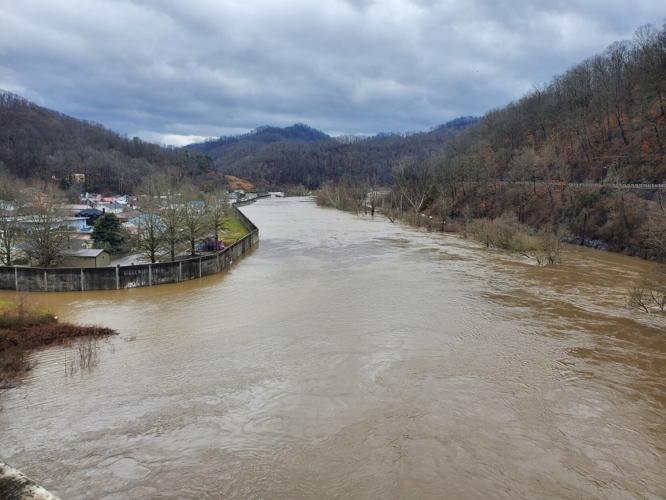
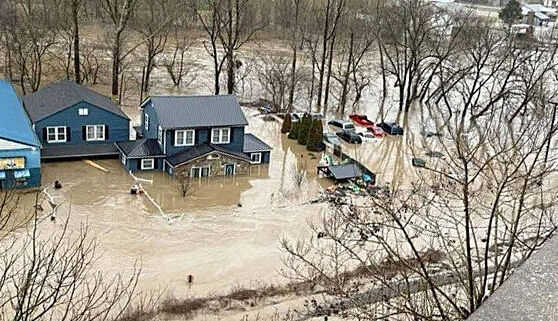
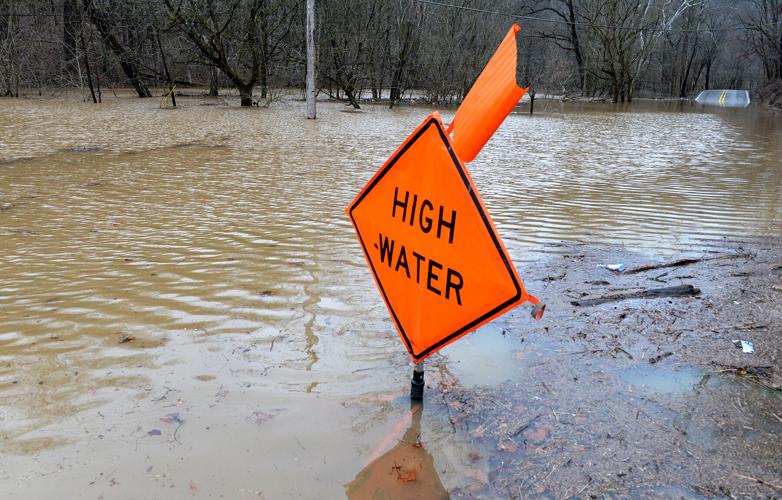
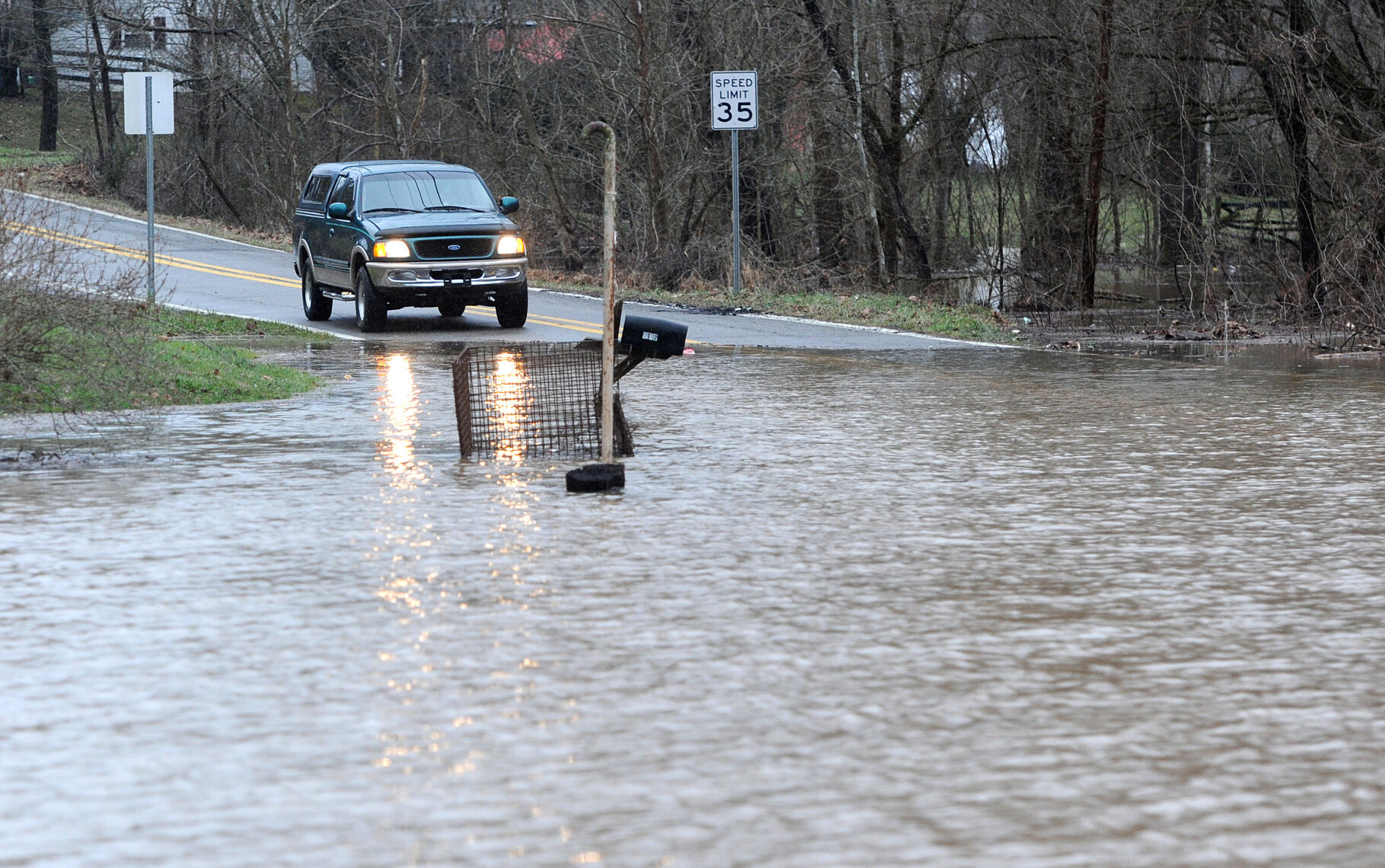
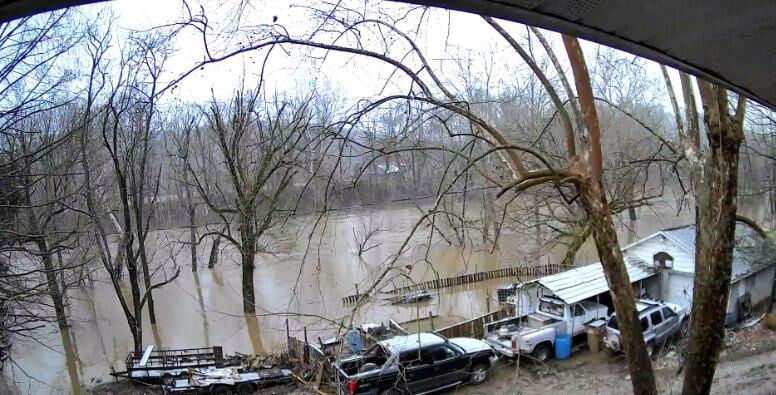
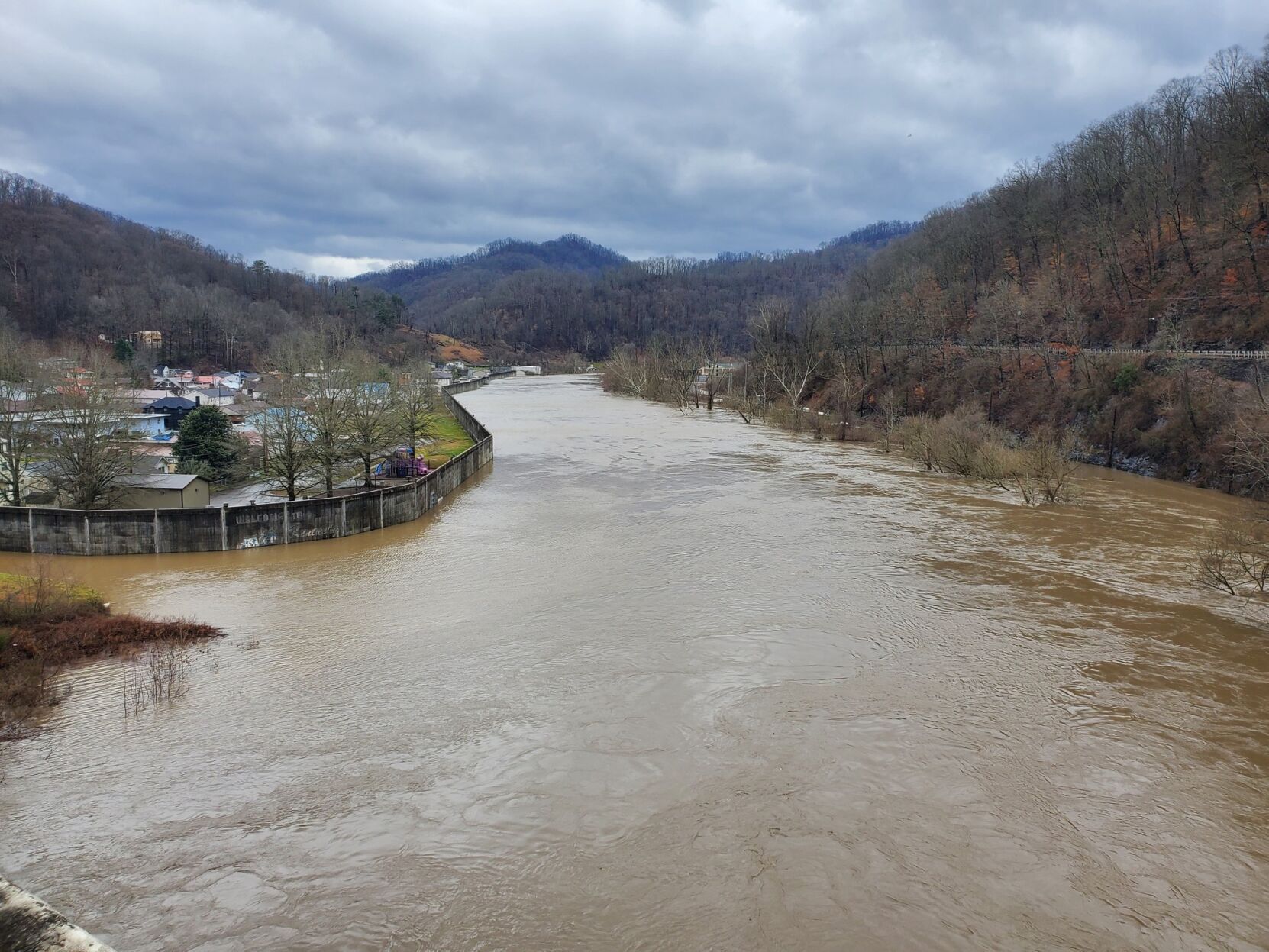
This is the view from the home of James and Jane Trump along the Coal River in Tornado at about 4:30 p.m. on Feb. 16, 2025. The Coal River in Tornado crested around 5:30 p.m. Sunday at 28.21 feet — a foot above the moderate flooding stage for the river.
- Courtesy photo
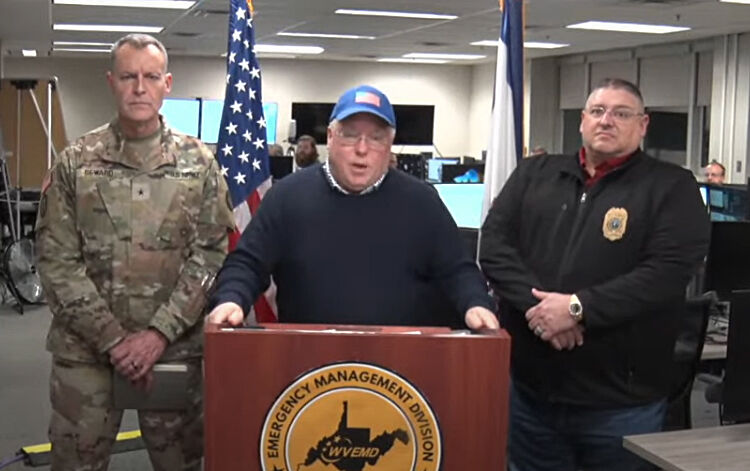
This is a screengrab of a livestream briefing on flooding across West Virginia was held on Feb. 16, 2025. From left are: Adjutant Gen. Jim Seward of the West Virginia National Guard, Gov. Patrick Morrisey and Rob Cunningham, deputy secretary of the West Virginia Department of Homeland Security.
- Video screengrab
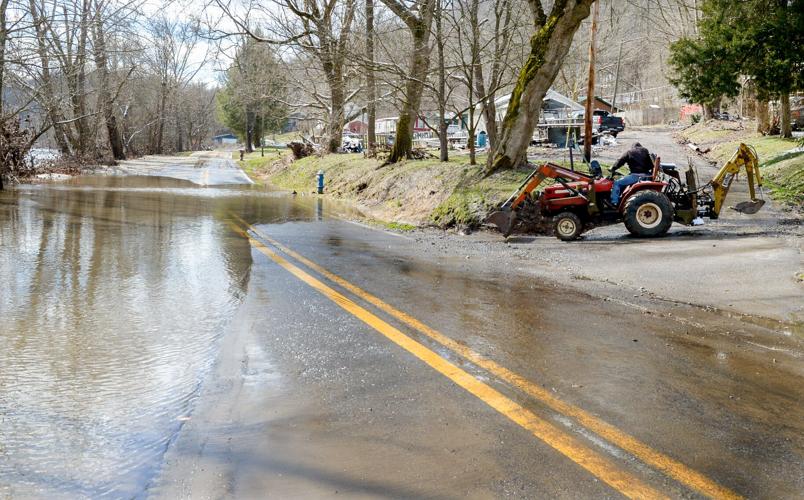
James Trump uses a tractor to scrape mud off of Mountain View Drive and his Tornado driveway as the Coal River begins receding from Coal River Road on Monday, Feb. 17, 2025. Trump said that, in the seven years he has lived there, this was the second time the river has flooded that high up onto his property.
- CHRIS DORST | Gazette-Mail
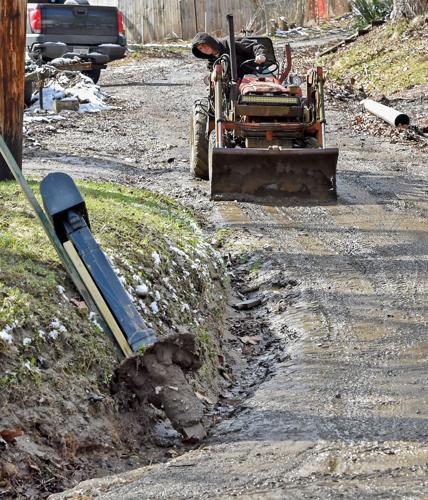

Vanessa Coleman watches her neighbor James Trump as he uses a tractor to scrape mud off of Mountain View Drive and his driveway in Tornado Monday, Feb. 17, 2025 after the Coal River had flooded into his yard and driveway Sunday. He said that in the seven years he has lived there this is the second time the river has flooded that high.
- CHRIS DORST | Gazette-Mail
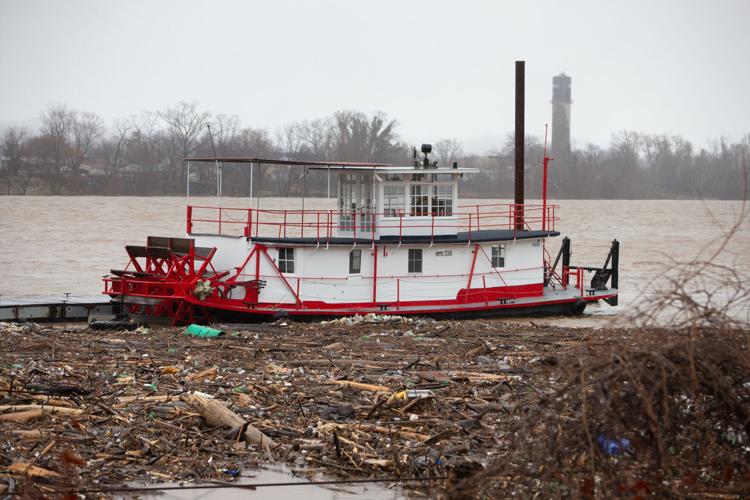
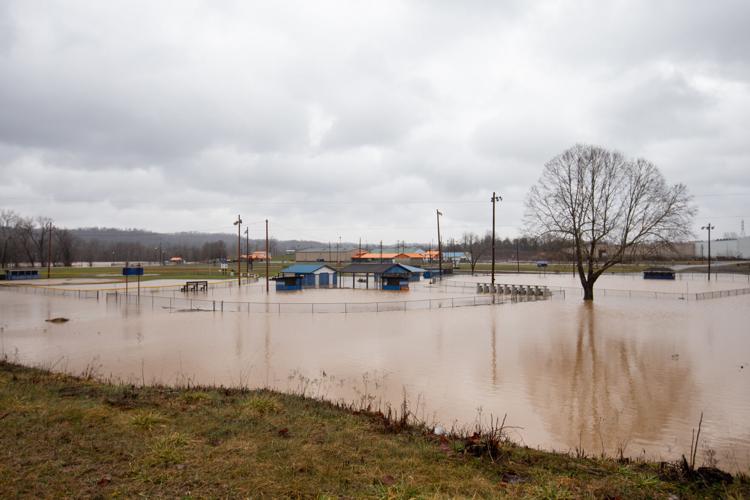
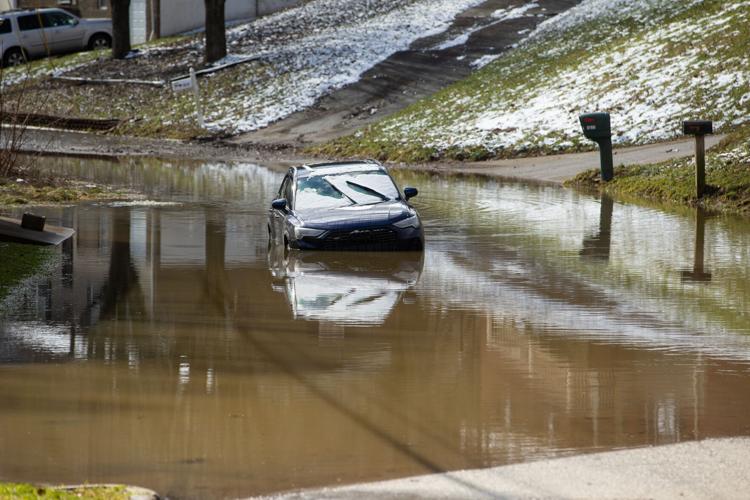
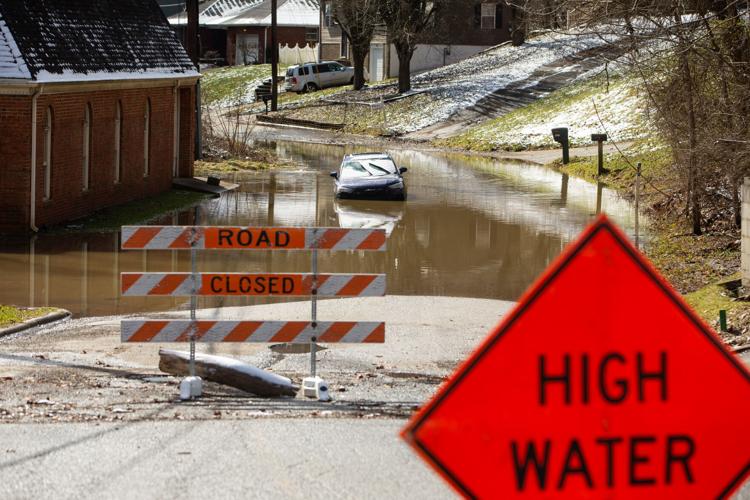
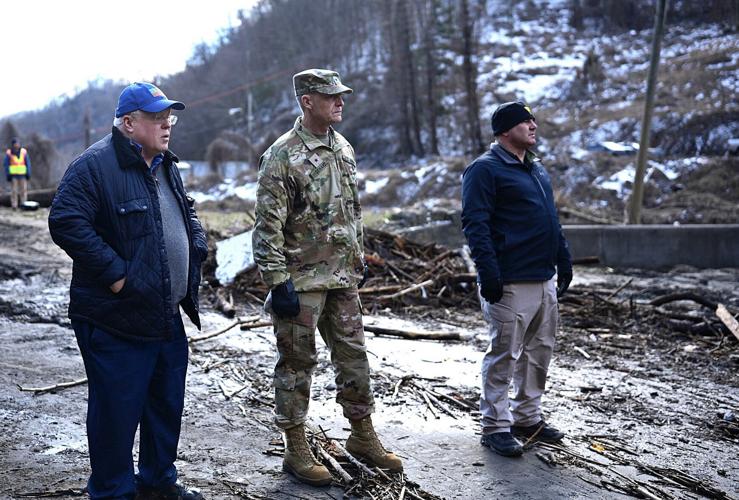
Gov. Patrick Morrisey (left), Brig. Gen. Jim Seward, adjutant general of the West Virginia National Guard, and a West Virginia State Police trooper from Morrisey’s security detail tour flood-damaged Welch, McDowell County, on Feb. 17, 2025.
- Courtesy photo
W.Va. funding frozen as its ground thawed
But Capito and West Virginia’s other most powerful political leaders have stood by Trump as his administration has frozen billions of dollars in congressionally approved funding through two laws enacted under former President Joe Biden that made unprecedented infrastructure and climate resilience investments in West Virginia.
Trump signed an executive order on his first day back in office, Jan. 20, that directed all agencies to immediately pause disbursement of funds appropriated through those two laws, the Infrastructure Investment and Jobs Act and Inflation Reduction Act.
Those two laws combined to pledge $433.9 million across 201 projects within a 50-mile radius of Williamson, according to a climate spending lookup tool published by Grist, a nonprofit climate news website.
Much of just over $20 million allotted across 24 projects within that radius by the Inflation Reduction Act was funding through the Rural Energy for America Program. The program has provided guaranteed loan financing and grant funding to agricultural producers and rural small businesses for renewable energy systems or to make energy efficiency improvements.
The freeze on that funding has left farmers and rural business owners in financial limbo, and although some environmental and agricultural funding has been unfrozen, the withholding of funds persisted in the first weeks of Trump’s second administration even after court orders to stop it.
A federal judge on Feb. 10 noted evidence that agencies were still withholding funding, slowing projects and jeopardizing investments.
U.S. District Court for the District of Rhode Island Chief Judge John McConnell Jr. wrote the funding freeze is “likely unconstitutional and has caused and continues to cause irreparable harm to a vast portion of this country.”
The lawsuit prompting that finding was filed by 23 Democratic-led states — and not West Virginia. State Attorney General JB McCuskey, a Republican, and Morrisey, McCuskey’s predecessor as attorney general, did not respond to requests for comment.

- By Mike Tony mtony@hdmediallc.com
- 7 min to read
A freeze on funding for the federal Abandoned Mine Land program to reclaim such lands came as the ground thawed this month amid rising temperatures, a scenario that frequently results in landslides and subsidence.
“The decision to freeze funding at such a crucial time raises serious concerns, as it jeopardizes ongoing remediation work,” Matt Hepler, environmental scientist for regional conservationist nonprofit Appalachian Voices, said in a Feb. 11 emailed statement.
‘We need that funding’
Trump’s environmental rollbacks have extended beyond the funding freeze.
The EPA terminated 388 employees on Feb. 14 after a “thorough review of agency functions in accordance with President Trump’s executive orders,” the EPA press office said in an email.
Many more EPA employees have been placed on administrative leave, with the administration targeting workers in environmental justice programs. The moves have sparked concerns the cuts will unnecessarily endanger lower-income families near pollution sites, of which West Virginia has a high concentration.
The EPA removed two references to “Black, rural, and underserved communities” it made in its initial response in the Biden administration’s final days to public comments on its proposed approval of West Virginia’s request for primary enforcement authority over a class of gas and oil wells key to underground carbon storage.
“[That was] not unexpected but very upsetting to see in writing,” Tom Torres, hydrogen program director at the Ohio River Valley Institute, a pro-renewable energy think tank, said in an email.
The EPA removed webpages about its online tool that combined demographic and environmental information the agency and the public used to identify areas experiencing disproportionate exposure to public health threats.
The EPA’s EJSCREEN tool, used by the EPA in environmental funding and technical assistance decisions, has been taken down under Trump.
The EPA’s disregard of environmental justice has drawn the ire of Adam Ortiz, the agency’s regional administrator for Region 3, which includes West Virginia, under Biden. Ortiz observed that “a lot of West Virginia lights up” under EJSCREEN, an unofficial version of which can still be found at pedp-ejscreen.azurewebsites.net.
“It’s like running a hospital, and people that come to the emergency room and are bleeding are the ones that really need the most attention right away. That’s exactly what EJSCREEN was,” Ortiz said. “It was [seeing] which places are in the most dire straits that need the most help right away.”
A week into West Virginia’s pending request for a Major Disaster Declaration, Babyt Sexton’s community is still bleeding.
“We need that funding,” Sexton said. “We were already hurting. And now we’re sick.”


