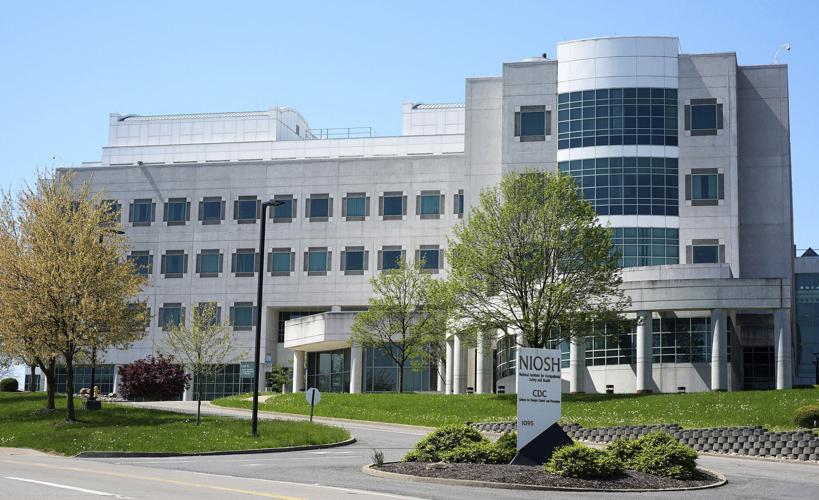
This is the National Institute for Occupational Safety and Health building in Morgantown, shown on April 23, 2025, where some 185 researchers and other employees received reduction-in-force notices as part of a larger push by the U.S. Department of Health and Human Services to dismiss 10,000 federal employees.
This is the National Institute for Occupational Safety and Health building in Morgantown, shown on April 23, 2025, where some 185 researchers and other employees received reduction-in-force notices as part of a larger push by the U.S. Department of Health and Human Services to dismiss 10,000 federal employees.
GENE J. PUSKAR | AP photo
The Trump administration has indicated that key operations to protect the respiratory health of the nation’s miners and other workers haven’t been restored within a 20-day time frame as required by a federal court last month.
The Department of Health and Human Services said in a Monday court filing that its National Institute of Occupational Safety and Health is still working to fully restore operations of the NIOSH Respiratory Health Division, 20 days after a federal judge in Charleston ordered HHS to restore the division by June 2.
District Judge Irene Berger’s May 13 order required restoration of NIOSH Respiratory Health Division jobs, including within the Coal Workers’ Health Surveillance Program, a resource heavily relied upon by West Virginia miners.
The order was a response to sweeping Trump administration staff cuts which effectively halted the agency’s congressionally mandated work to provide wide-ranging protections for the nation’s miners.
The ruling followed testimony from NIOSH veterans that NIOSH employees who performed duties related to the Coal Workers’ Health Surveillance Program were needed to maintain essential functions of the program. The program has allowed researchers to identify disease trends that have included a sharp rise in black lung disease afflicting increasingly younger miners in central Appalachia.
Monday’s filing included a declaration from NIOSH Director John Howard that reported progress toward full restoration of Respiratory Health Division operations but didn’t indicate efforts to reverse mining research staff cuts, an omission that could violate Berger’s order.
The order came in a lawsuit levied by Kanawha County resident and Raleigh County miner Harry Wiley, co-filed on his behalf by Beckley-based attorney Sam Petsonk. Petsonk said Monday they had concerns it didn’t appear, per Howard’s declaration, that all programs and services mandated by law within the NIOSH are functioning as they were before the staff cuts.
Nearly all NIOSH Respiratory Health Division employees were briefly called back to the office the week before Berger’s order but then returned to administrative leave and couldn’t perform their job duties, Berger observed. Most employees received reduction in force or “RIF” notices on April 1 with a termination date of June 2, Berger noted.
“We are considering our options,” Petsonk said in an email Monday.
Operations NIOSH says it's still working to restore
Petsonk pointed out a section of Howard’s declaration in which the NIOSH director reported the agency was working a chain of command at HHS and the Centers for Disease Control and Prevention, the HHS agency under which the NIOSH is housed, to fully restore Respiratory Health Division operations, including:
Restoring and establishing contracts needed to carry Respiratory Health Division operations, including covering contracts to classify, view and maintain chest X-rays for the Coal Workers’ Health Surveillance Program
Restoring external communications with partners and constituents needed to execute the Respiratory Health Division’s work, including promoting Coal Workers’ Health Surveillance Program mobile unit surveys
Efficiently spend funds to carry out Respiratory Health Division operations, including outreach activities
The Coal Workers' Health Surveillance Program, established through federal law in 1969, is widely credited for saving and extending miners’ lives through black lung screenings it has provided to miners at no cost to them.
Union reported 195 mining research jobs slated to be lost
Howard said in Monday’s filing HHS notified, on April 1, all non-bargaining unit employees and most bargaining unit employees at the NIOSH Morgantown facility would be terminated this past Monday.
Other bargaining unit employees at the Morgantown site also received a “Reduction in Force” notice and were informed on May 2 their HHS employment would be terminated on July 2.
In the Respiratory Health Division, 51 employees got a “Reduction in Force” notice, Howard reported.
The HHS’ filing Monday doesn’t indicate any action to reverse Trump administration cuts effectively wiping out NIOSH mining research divisions in Pittsburgh and Spokane, Washington.
NIOSH mining research employees represented by American Federation of Government Employees Local 1916 slated to lose their jobs total 110 in Pittsburgh and 85 in Spokane, respectively, AFGE Local 1916 President Lilas Soukup told the Gazette-Mail last month.
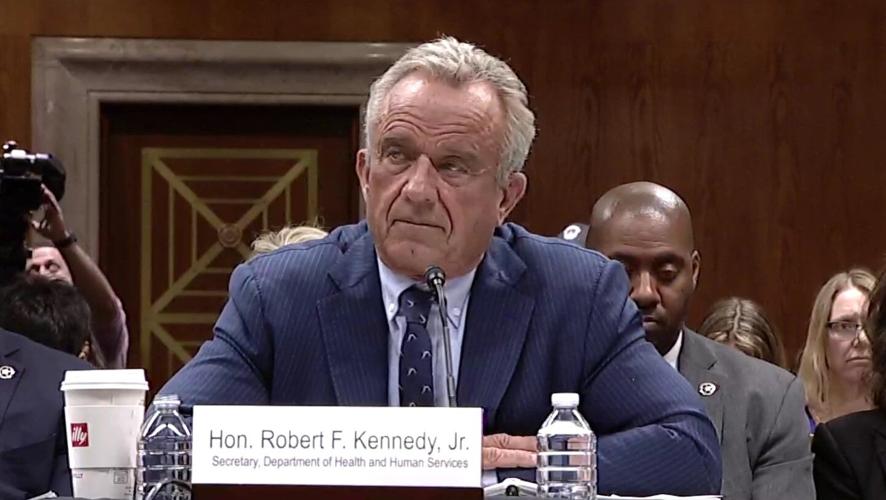
Health and Human Services Secretary Robert Kennedy Jr. speaks before a Senate health subcommittee on Tuesday, May 20, 2025.
HHS Secretary Robert F Kennedy Jr., who implemented the cuts and claimed they would make the agency more responsive and efficient, was urged by lawmakers at a U.S. Senate subcommittee hearing last month to restore NIOSH mining research jobs after Berger’s order.
Sen. Mike Rounds, R-S.D., decried cuts to staff at the NIOSH Spokane Mining Research Division, saying agency downsizing had resulted in cancellation of a $1.2 million grant to improve underground mining safety for the South Dakota School of Mines and Technology in his district.
Kennedy told Rounds he would work with him to protect miners and invited Rounds to contact his office.
“This is one we need to get fixed,” Rounds told Kennedy.
Sen. Shelley Moore Capito, R-W.Va., chair of the Senate Labor, Health and Human Services, Education and Related Agencies Appropriations Subcommittee, told Kennedy she didn’t think eliminating NIOSH programs would “right-size our government.”
Court order mandated 'no pause' in miner protections
Berger’s order in the District Court for the Southern District of West Virginia ordered that “there be no pause, stoppage or gap in the protections and services mandated by Congress in the Mine Act and the attendant regulations for the health and safety of miners.”
Berger notes in her order that the Mine Act, or Federal Mine Safety and Health Act of 1977, incorporates reference to the NIOSH — including providing for the NIOSH and its parent agency, the Department of Health and Human Services — to submit results of “research, demonstrations, and experiments” while advising the Department of Labor secretary of the need to issue new rules to carry out the Mine Act.
Berger observes that the NIOSH is required under federal code to permanently establish a mine safety and health office to enhance “development of new mine safety technology and technological applications and to expedite the commercial availability and implementation of such technology in mining environments.”
Petsonk said last month he believed Berger’s order covers NIOSH mining research programs in Pittsburgh and Spokane and planned to see whether HHS would certify restoration of those programs under Berger’s order.
Research units have complemented diagnostic work
The preventative work of those NIOSH mining research divisions has complemented rather than duplicated the diagnostic work that restored Respiratory Health Division employees have performed.
The Pittsburgh Mining Research Division has focused on coal, stone, sand and gravel mining, while the Spokane Mining Research Division has focused on deep underground metal mines and large open pits, with both collaborating on projects. Both the Pittsburgh and Spokane divisions have studied how to control mine dust and protect miners from dust exposure.
Effectively eliminating those divisions could mean the elimination of projects they have taken on, including analyzing toxic silica dust and destigmatizing mental health.
Both the Pittsburgh and Spokane mining research divisions were working on near-real-time silica analysis projects and had contract efforts curtailed by HHS “reduction in force” notices and contract terminations, according to mine safety experts.
CLICK HERE to follow the Charleston Gazette-Mail and receive