A mix of clouds and sun. A stray shower or thunderstorm is possible. High 79F. Winds SSW at 5 to 10 mph..
Tonight
Partly cloudy this evening followed by increasing clouds with showers developing after midnight. Low near 65F. Winds light and variable. Chance of rain 40%.
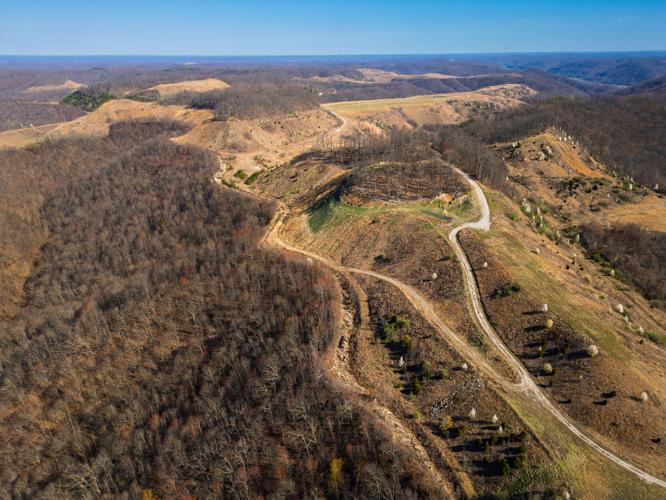
Pictured is a seep staining in an unnamed tributary of Lens Creek, a photo included in a West Virginia Department of Environmental Protection report released Sept. 9, 2025, focused on the seep.
The West Virginia Department of Environmental Protection has found a seep of polluted water likely was caused by mining near Kanawha State Forest and has negatively affected water quality in a tributary of Lens Creek, findings conservationists say confirm their allegations about the cause of area acid mine drainage near Marmet.
But the DEP has downplayed the report containing those findings, despite its long history of determining environmental violations on the 160-acre mine permit in question near the state forest.
“It’s deeply disappointing to see the [DEP] attempting to claim that this investigation says the opposite of what it actually says,” said Chad Cordell of the Kanawha Forest Coalition, a volunteer nonprofit formed in 2014 to stop mountaintop removal mining on the Kanawha State Forest perimeter. The coalition has opposed surface mining operations the DEP has allowed from the permittee implicated in the DEP report, Jacksonville, Florida-based Keystone West Virginia LLC.
Pictured is a seep staining in an unnamed tributary of Lens Creek, a photo included in a West Virginia Department of Environmental Protection report released Sept. 9, 2025, focused on the seep.
In a report it completed on Sept. 9, the DEP “reasonably concluded” the seep “is likely attributable” to Keystone activity on KD Surface Mine No. 1. The report found the seep “most likely resulted from” exposure of toxic earth encountered in coal mining and is entering shallow groundwater.
The DEP report indicates the seep “has had negative influence on” measures of pollution in the left fork of an unnamed tributary of Lens Creek, including pH and manganese, both parameters for which the DEP has found the creek to be impaired.
The report found increases in conductivity and sulfates likely attributed to surface mining. Conductivity is a measure of how well water conducts electricity that is elevated by large-scale surface mining and other pollution sources. Sulfates are contaminants the DEP uses to identify sites likely affected by mine drainage.
June and July DEP field visits on which the report was based followed an appeal of the DEP’s March approval of a bond release on the permit filed by Cordell and Willie Dodson, coal impacts program manager at Appalachian Voices, an environmental nonprofit. Cordell and Dodson contended the permit didn’t meet requirements for bond release due to untreated, unlawful acid mine drainage.
The DEP may grant permittees a release from statutorily required bond — financial assurance that they will satisfy all requirements of a permit before it is issued — if the agency determines they performed the reclamation covered by the bond. The minimum amount of bond for any mine reclamation bonding is $10,000 under state law.
“It is now DEP’s responsibility to reverse the bond release they recklessly granted, and ensure that Keystone funds ongoing treatment of this pollution until it clears up,” Dodson said in a statement.
An Appalachian Voices news release on the DEP report featured a headline stating the report concludes KD 1 Surface Mine was the “cause of acid mine drainage near Marmet,” adding the report “confirms allegations voiced by conservation groups.”
But DEP Chief Communications Officer Terry Fletcher downplayed the report in response to a Gazette-Mail request for comment, calling it a “preliminary assessment” that “failed to establish a hydrologic connection” between the surface mining and observed seepage.
Fletcher said additional sampling, field reconnaissance and review were underway to further investigate — and that the source of the seep and “any potential relationship with the mining operation” still are undetermined.
“WVDEP remains committed to following the law, applying sound science, and completing a full evaluation of the data before determining next steps,” Fletcher said in an email.
Fletcher did not respond to questions seeking any time frame for a final determination or any decided next steps for the DEP toward one.
The DEP has issued 48 violations on the KD Surface Mine No. 1 permit since 2007, including six since Keystone took control of the permit in 2021 after affiliate Keystone Industries LLC transferred permits for surface mines near Kanawha State Forest in 2013 to Revelation Energy LLC, a Milton-based company and nation’s sixth-largest coal producer that operated the mines until the permits were revoked in October 2020. The permits were revoked 15 months after Revelation and its affiliate Blackjewel LLC filed for Chapter 11 bankruptcy protection.
Keystone could not be reached for comment.
Segments of Lens Creek are impaired via high levels of fecal coliform, iron, pH, selenium and dissolved aluminum, according to a DEP draft statewide assessment of water quality released in July.
Cordell said Keystone’s mining operation is the only plausible cause of acid mine drainage in the area.
“[O]ur water quality and public health will continue to suffer until agency leadership starts taking their responsibility to the people of West Virginia seriously,” Cordell said. “If the agency feels they still need more information, then by all means they should get it, but they shouldn't use that as an excuse for further inaction.
DEP 'preliminary assessment' reference questioned
Fletcher said diffuse subsurface seeps of an unknown origin aren’t subject to effluent limits designed to protect hydrologic balance.
But Cordell says the acid mine discharge isn’t diffuse but instead an illegal, unpermitted discharge from a point source — a single, identifiable source from which pollution is discharged.
“I've stood right there where comes out of the ground,” Cordell said.
Cordell questioned Fletcher’s reference to the Sept. 9 report as a “preliminary assessment,” pointing out DEP officials had framed the agency’s work as more definitive in email correspondence with him.
DEP Division of Mining and Reclamation Assistant Director Nicki Taylor estimated to Cordell in an Aug. 19 email the DEP should “have the investigation completed by the end of next week.” DEP Division of Mining and Reclamation Director Jason Rorrer told Cordell in a July 9 email a DEP geologist who conducted a site visit and collected samples was in a data analysis phase prior to authoring “a final report.”
Judge: Keystone violated laws near Kanawha State Forest
A federal judge ruled in 2023 that Keystone West Virginia violated federal water pollution and mine reclamation laws near Kanawha State Forest.
Judge Joseph Goodwin of the U.S. District Court for the Southern District of West Virginia found that Keystone West Virginia violated the Clean Water Act and the Surface Mining Control and Reclamation Act through unpermitted pollution on one surface mine permit and failure to meet water pollution control reporting requirements on another.
Goodwin ruled he couldn’t find Keystone West Virginia was still violating the acts.
Goodwin’s ruling responded to a lawsuit filed in August 2022 by four environmental groups complaining that excessive quantities of pollutants from Keystone West Virginia mine sites were degrading Davis Creek, Rush Creek, Lens Creek and their tributaries.
The Kanawha Forest Coalition, joined by environmental nonprofits West Virginia Highlands Conservancy, Appalachian Voices and the Sierra Club, alleged in their lawsuit that Keystone West Virginia failed to secure required permits for mine discharge sites and comply with discharge monitoring and reporting requirements.
In July, the four conservationist groups filed a pending request for the court to finalize a December 2023 proposed agreement to settle the lawsuit under which Keystone West Virginia would pay $34,875 to the Kanawha State Forest Foundation to fund an environmental mitigation project.
If approved by the court, Keystone West Virginia would have to pay the foundation within 30 days to fund the project intended to improve water quality and habitat in and near Davis Creek and its tributaries within the Kanawha State Forest.
The foundation is a volunteer nonprofit organization focused on preserving the state forest. The organization isn’t a party in the lawsuit.
The proposed agreement notes that Davis Creek was one of the streams receiving discharge from mines at issue in the lawsuit.
The environmental mitigation project featured in the proposed settlement would include protection and enhancement of wetlands and floodplains important to water quality as well as preserving and restoring habitat for rare, threatened and endangered species.
'Endless delay is unacceptable'
In a February 2018 report, the DEP determined most of water sampled in area ditches seemed to indicate surface water runoff and showed no correlation to water sampled from seeps. Connections to KD Surface Mine No. 1 and two other nearby mine permits then held by Revelation couldn’t be demonstrated despite water chemistry from the seeps indicating the water was linked to coal seams, the DEP found.
Cordell and Dodson say the DEP has failed to sufficiently investigate acid mine drainage in the area, allowing pollution to take an avoidable toll on already vulnerable waters.
“WVDEP remains committed to following the law, applying sound science, and completing a full evaluation of the data before determining next steps,” Fletcher said.
“That’s fine if it’s sincere,” Cordell said of Fletcher’s response. “Action and enforcement is needed. Inaction and endless delay is unacceptable.”
CLICK HERE to follow the Charleston Gazette-Mail and receive